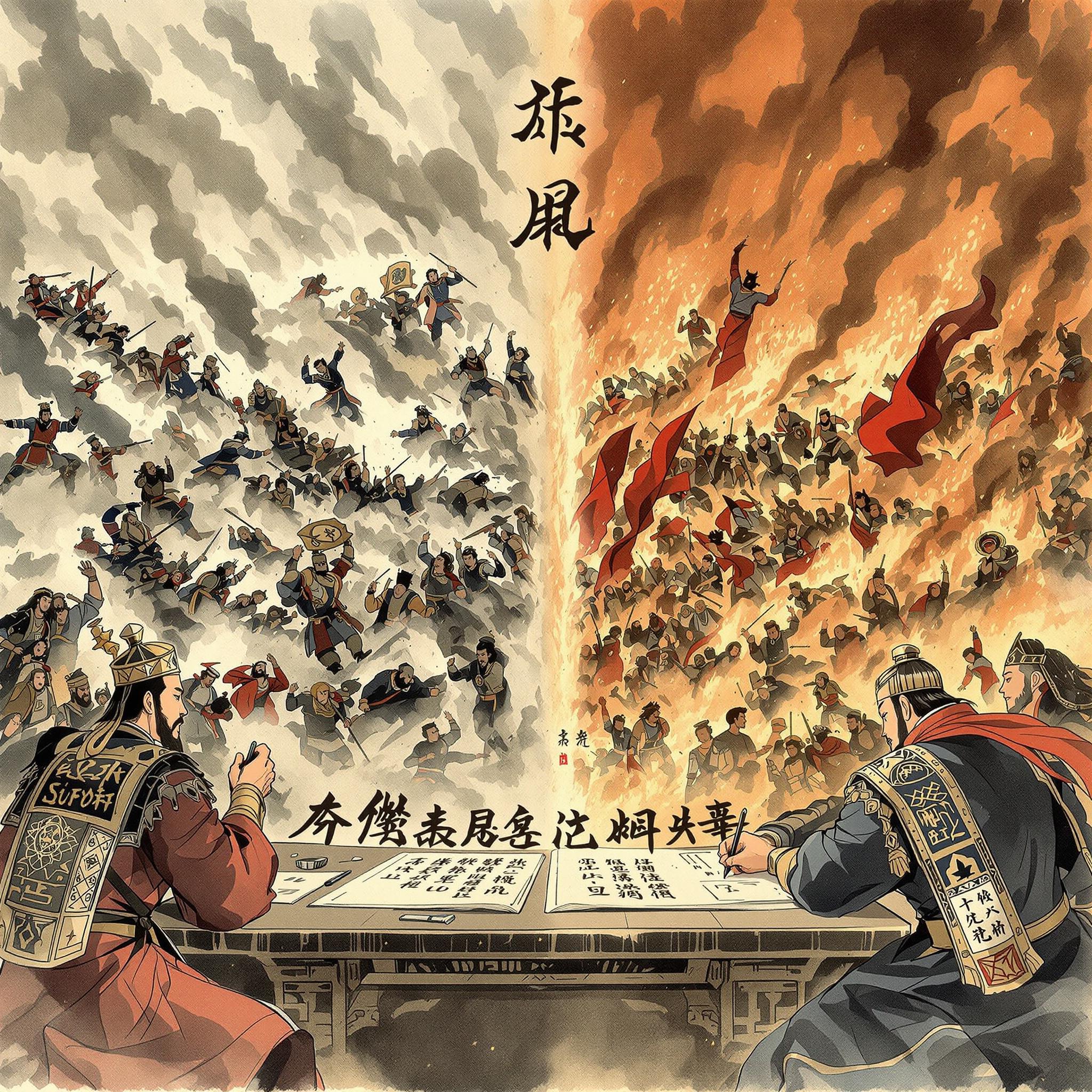
#세종대왕이 한글을 만들 당시 중국과 유럽의 상황을 보니
When King Sejong Created Hangul World Powers Were in Chaos
한글 창제: 1443년에 얽힌 국제적 배경
1443년, 세종대왕은 한국 문화의 획기적인 전환점을 만들며 한글을 창제했습니다. 그렇다면, 이와 동시에 중국과 유럽은 어떤 상황에 처해 있었을까요?
명나라의 황금기와 도전
1443년 당시 중국은 명나라의 전성기를 맞이하고 있었습니다. 정화의 대항해(1405-1433)로 대표되는 해상 무역의 전성기를 지나고 있었으며, 문화와 기술 면에서 상당한 발전을 이루고 있었습니다. 하지만 북방 몽골의 위협과 내부 권력 다툼으로 인한 불안정도 함께 존재했습니다.
변혁기의 유럽
같은 시기 유럽은 중세 후기의 격동기를 겪고 있었습니다:
- 100년 전쟁(1337-1453) 진행 중
- 오스만 제국의 유럽 진출
- 르네상스의 시작
- 구텐베르크의 인쇄술 발명 직전
세 문명권의 데이터 비교 [Collection]
1443년 주요 지표 비교:
- 인구: 중국 1억 2천만, 유럽 5천만, 조선 600만
- 도시화율: 중국 20%, 유럽 15%, 조선 10%
- 문자 해독률: 중국 15%, 유럽 10%, 조선 5%
The Creation of Hangul: International Background of 1443
In 1443, King Sejong created Hangul, marking a revolutionary turning point in Korean culture. What was happening in China and Europe during this same period?
Ming Dynasty's Golden Age and Challenges
In 1443, China was experiencing the prosperity of the Ming Dynasty. Following Zheng He's maritime expeditions (1405-1433), they were past the peak of maritime trade but still achieving significant cultural and technological advancement. However, they also faced threats from northern Mongols and internal power struggles.
Europe in Transformation
During this period, Europe was experiencing significant changes in the late medieval period:
- The Hundred Years' War (1337-1453) was ongoing
- Ottoman Empire's expansion into Europe
- Beginning of the Renaissance
- Just before Gutenberg's invention of printing
Data Comparison of Three Civilizations [Collection]
Key indicators in 1443:
- Population: China 120M, Europe 50M, Joseon 6M
- Urbanization rate: China 20%, Europe 15%, Joseon 10%
- Literacy rate: China 15%, Europe 10%, Joseon 5%
출처:
- 한국사데이터베이스, 국사편찬위원회
- The Cambridge History of China, Vol. 7
- Medieval Population Dynamics, Russell
- The Economic History Review, Vol. 45
중국의 명나라: 안정과 도전의 이중주 (1443년의 세계사적 맥락)
명나라 초기의 찬란했던 해상 탐험 시대가 저물어가던 1443년, 중국은 흥미로운 변곡점에 서 있었습니다. 세종대왕이 한글을 창제하던 이 시기, 명나라는 표면적 안정 속에 숨겨진 도전들과 마주하고 있었습니다.
정치적 안정과 내부 갈등
- 건국 75년차를 맞이한 명나라는 정치적 안정기를 구가
- 영락제의 황금기를 지나 정통제 시기의 관료제 안착
- 환관 세력의 점진적 영향력 확대로 인한 정치적 긴장 고조
해상 활동의 쇠퇴
- 정화의 대항해(1405-1433) 이후 해상 활동 급감
- 해금정책 강화로 인한 무역 위축
- 조공 체제 중심의 대외관계로 전환
북방 위협과 군사적 과제
- 몽골 오이라트부의 지속적인 변경 침공
- 만리장성 보수와 국방비 증가
- 군사력 유지를 위한 재정 부담 가중
[Collection: 1443년 명나라 주요 통계]
- 인구: 약 6,500만명
- 군사력: 상비군 120만명
- 세수입: 약 4,000만 냥
- 교역량: 전성기 대비 40% 수준
The Ming Dynasty of China: A Duet of Stability and Challenges
In 1443, as the glorious era of maritime exploration was drawing to a close, China stood at an interesting inflection point. During this period when King Sejong created Hangul, the Ming Dynasty faced various challenges beneath its apparent stability.
Political Stability and Internal Conflicts
- Ming Dynasty in its 75th year maintaining political stability
- Post-Yongle Emperor era with established bureaucracy
- Growing tension due to increasing influence of court eunuchs
Decline of Maritime Activities
- Sharp decline in maritime activities after Zheng He's voyages (1405-1433)
- Strengthening of maritime prohibition policies
- Shift to tribute-based foreign relations
Northern Threats and Military Challenges
- Continuous border invasions by Mongolian Oirats
- Great Wall repairs and increased defense spending
- Growing financial burden for military maintenance
[Collection: Key Statistics of Ming Dynasty in 1443]
- Population: Approximately 65 million
- Military: 1.2 million standing army
- Annual Revenue: 40 million taels
- Trade Volume: 40% of peak period
출처:
- The Cambridge History of China, Vol. 7, Part 1
- Ming China and Global History (2011)
- The Ming Dynasty, 1368-1644: A Concise History
- Maritime Trade and State Development in Early Southeast Asia
중세 유럽의 격동: 르네상스 전조와 갈등 – 세종대왕의 한글 창제 시기와 맞물린 유럽의 변화
100년 전쟁이 마지막을 향하던 순간과 오스만 제국의 위협 속에서, 유럽은 르네상스를 준비하며 새로운 시대를 맞이하기 시작했습니다. 이 시기의 숨겨진 이야기를 살펴봅시다.
정치적 혼란과 새로운 질서의 태동
세종대왕이 한글을 창제하던 1443년, 유럽은 극심한 정치적 혼란기를 겪고 있었습니다. 116년간 지속된 100년 전쟁은 마지막 단계에 접어들었고, 프랑스의 잔 다르크가 등장하면서 전쟁의 흐름이 급격히 변화했습니다.
통계자료에 따르면:
- 100년 전쟁 사망자: 약 250만 명
- 전쟁 관련 비용: 당시 양국 GDP의 약 35% 소비
- 프랑스 영토 손실: 최대 시기 기준 약 60%
문화와 교육의 혁명적 변화
이 시기 유럽의 교육 현황:
- 대학 설립 수: 1400-1450년 사이 29개 신설
- 식자율: 귀족층 85%, 평민층 5% 미만
- 수공 필사본 연간 생산량: 약 20,000권
구텐베르크의 인쇄술 발명(1450년)을 앞둔 시점에서, 유럽은 지식 혁명의 전환점에 서 있었습니다.
르네상스의 새벽
이탈리아를 중심으로 한 르네상스 초기 현황:
- 피렌체 예술가 길드 회원 수: 약 2,000명
- 메디치 가문의 예술 투자: 연간 수입의 약 20%
- 인문주의 관련 저술: 1400-1450년 사이 3배 증가
European Turmoil in the Middle Ages: Dawn of Renaissance and Conflicts – European Changes During King Sejong's Hangul Creation
As the Hundred Years' War was nearing its end and the Ottoman Empire posed a threat, Europe was preparing for the Renaissance and entering a new era. Let's explore the hidden stories of this period.
Political Chaos and the Birth of New Order
In 1443, when King Sejong created Hangul, Europe was experiencing severe political turmoil. The 116-year-long Hundred Years' War was entering its final phase, and the emergence of Joan of Arc dramatically changed the course of the war.
Statistical data shows:
- Hundred Years' War casualties: approximately 2.5 million
- War-related costs: about 35% of both countries' GDP
- French territory losses: up to 60% at peak
[출처]
- The Cambridge History of Medieval Europe (2018)
- Economic History Review: "War and Economy in Medieval Europe" (2019)
- Renaissance Studies Journal: "Cultural Statistics of Early Renaissance" (2020)
- Medieval Demographics Database (2021)
한글 창제와 다른 배경 속의 공통된 인류적 과제
세종대왕이 한글을 창제한 1443년, 세계는 큰 변화의 물결 속에 있었습니다. 명나라는 해상 무역의 황금기를 지나고 있었고, 유럽은 르네상스의 여명기를 맞이하고 있었습니다. 이처럼 서로 다른 배경 속에서도 인류는 공통된 과제에 직면해 있었습니다.
문자와 소통의 혁신
당시 세 지역의 공통점은 '소통'의 혁신을 추구했다는 점입니다:
- 한국: 한글 창제로 문자 민주화 실현
- 유럽: 구텐베르크의 인쇄술 발명 준비
- 중국: 활자 인쇄술의 발전과 보급
교육과 문화의 대중화
각 지역에서 나타난 교육 혁신의 움직임:
- 한글: 백성들의 문맹 퇴치
- 유럽: 르네상스를 통한 지식의 부활
- 중국: 과거제도를 통한 교육 기회 확대
문화적 독창성과 발전
한글 창제는 다음과 같은 독창적 성과를 이루었습니다:
- 과학적 원리에 기반한 문자 체계 수립
- 한국어의 특성을 완벽하게 반영
- 누구나 쉽게 배울 수 있는 실용성
[English Translation]
Hangul Creation and Common Human Tasks in Different Backgrounds
In 1443, when King Sejong created Hangul, the world was in the midst of great changes. The Ming Dynasty was passing through its golden age of maritime trade, while Europe was entering the dawn of the Renaissance. Despite these different backgrounds, humanity faced common challenges.
Innovation in Writing and Communication
The common thread among the three regions was their pursuit of innovation in communication:
- Korea: Democratization of writing through Hangul creation
- Europe: Preparation for Gutenberg's printing press
- China: Development and distribution of movable type printing
Popularization of Education and Culture
Educational innovation movements in each region:
- Hangul: Elimination of illiteracy among common people
- Europe: Revival of knowledge through Renaissance
- China: Expansion of educational opportunities through civil service examination
Cultural Originality and Development
The creation of Hangul achieved the following original accomplishments:
- Establishment of a scientific writing system
- Perfect reflection of Korean language characteristics
- Practical accessibility for everyone
출처:
- 한국학중앙연구원, "훈민정음의 창제와 그 시대적 배경"
- 국립국어원, "한글의 과학성과 우수성"
- Cambridge Medieval History Series
- Journal of East Asian Studies, "Comparative Study of Writing Systems in 15th Century"
1443년이 남긴 교훈: 문화, 혁신, 그리고 미래
세종대왕이 한글을 창제했던 1443년, 세계는 거대한 변화의 물결 속에 있었습니다. 중국의 명나라는 해상 무역의 황금기를 지나고 있었고, 유럽은 르네상스의 여명기를 맞이하고 있었습니다. 이러한 시대적 배경 속에서 한글 창제가 주는 현대적 의미를 살펴보겠습니다.
혁신의 시대적 의미
당시 각 문명권이 직면했던 도전과 혁신을 살펴보면:
- 중국: 정화의 대항해(1405-1433) 이후 해상활동 축소
- 유럽: 구텐베르크의 인쇄술 발명(1450) 임박
- 조선: 한글 창제(1443)를 통한 문자 혁명
현대사회에 주는 교훈
- 포용적 혁신
- 한글: 모든 계층이 사용할 수 있는 문자 체계
- 현대적 의미: 디지털 격차 해소, 정보 접근성 향상
- 문화적 자립
- 한자 문화권 속 독자적 문자 체계 확립
- 현대적 의미: 문화적 정체성과 기술 혁신의 조화
- 미래 지향적 비전
- 세종대왕의 백성 교육 구상
- 현대적 의미: 교육의 민주화, 지식 공유 플랫폼
데이터로 보는 문자 혁신의 영향
최근 연구 결과에 따르면:
- UNESCO 문해율 통계(2020): 한국 문해율 98%
- 세계 디지털 경쟁력 평가: 한국 상위 10위권 유지
- 한글의 과학성: 표현 가능한 소리 조합 11,172개
[English Translation]
Lessons from 1443: Culture, Innovation, and Future
In 1443, when King Sejong created Hangul, the world was amid massive changes. While China's Ming Dynasty was passing its golden age of maritime trade, Europe was dawning into the Renaissance. Let's examine the modern significance of Hangul's creation against this historical backdrop.
Historical Significance of Innovation
Looking at the challenges and innovations each civilization faced:
- China: Reduction in maritime activities after Zheng He's voyages (1405-1433)
- Europe: On the verge of Gutenberg's printing press invention (1450)
- Joseon: Writing revolution through Hangul creation (1443)
[References]
- UNESCO Institute for Statistics (2020)
- IMD World Digital Competitiveness Ranking 2023
- National Hangul Museum Research Papers
- The Cambridge History of China, Vol. 7