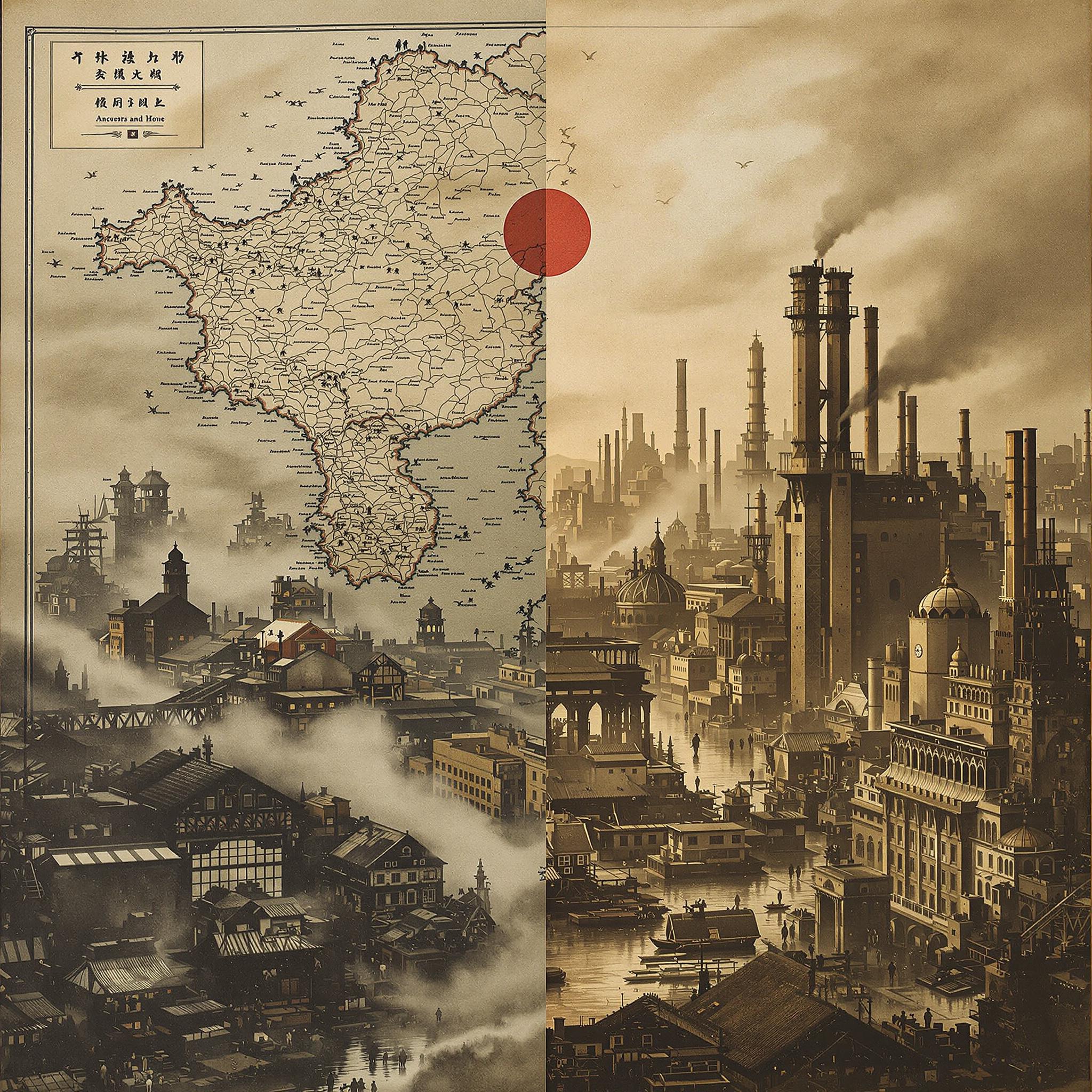
#대동여지도 제작 당시 동서양의 극명한 대조 19세기 중국의 몰락과 유럽의 부상
The East West Divide When Kim Jeongho Created Daedong Yeojido China Falls as Europe Rises
19세기 중반: 세계는 격동의 시대 – 대동여지도 제작 당시의 세계정세
김정호가 『대동여지도』를 제작한 이 시기는 단순히 한반도만의 이야기가 아닙니다. 당시의 중국과 유럽, 그리고 세계는 어떤 큰 변화 속에 놓여 있었을까요?
청나라의 위기와 변화
1840년대부터 1860년대, 중국은 심각한 위기를 맞이했습니다. 아편전쟁(1840-1842)으로 인해 문호를 개방해야 했고, 태평천국의 난(1851-1864)으로 내부적 혼란까지 겪었습니다. 이 시기는 중국의 전통적 질서가 크게 흔들리던 때였습니다.
유럽의 산업혁명과 제국주의
유럽은 산업혁명의 절정기를 맞이하며 세계를 지배하는 새로운 강자로 부상했습니다. 특히 영국은 강력한 해군력을 바탕으로 전 세계 무역을 장악했으며, 1848년 유럽 전역의 혁명은 근대 국가 체제의 기틀을 마련했습니다.
[Collection]
- 아편전쟁 기간: 1840-1842
- 태평천국의 난 기간: 1851-1864
- 1848년 유럽 혁명 참여국가 수: 50여 개국
- 영국의 식민지 보유 면적: 당시 지구 육지 면적의 1/4
The Mid-19th Century: An Era of Global Upheaval – The World During the Creation of Daedong Yeojido
The period when Kim Jeong-ho created the "Daedong Yeojido" wasn't just about the Korean Peninsula. What major changes were occurring in China, Europe, and the world at that time?
Crisis and Change in Qing China
From the 1840s to 1860s, China faced a severe crisis. The Opium War (1840-1842) forced open its doors, and the Taiping Rebellion (1851-1864) caused internal chaos. This was a period when China's traditional order was severely shaken.
European Industrial Revolution and Imperialism
Europe reached the peak of the Industrial Revolution and emerged as the new world power. Britain, in particular, dominated global trade with its powerful navy, while the 1848 European revolutions laid the foundation for modern state systems.
[Collection]
- Opium War period: 1840-1842
- Taiping Rebellion period: 1851-1864
- Number of countries involved in the 1848 European Revolution: About 50
- British colonial territory: 1/4 of Earth's land area at the time
출처:
- Cambridge World History Vol. 7
- The Oxford History of the British Empire
- China: A New History by John King Fairbank
- The Age of Revolution 1789-1848 by Eric Hobsbawm
중국: 내우외환의 시대 – 대동여지도 시대의 청나라
청나라의 몰락과 외세의 압력, 아편 전쟁의 상처가 깊이 새겨진 중국. 외압과 내란 속에서 중국은 어떤 길을 걸어가고 있었을까요?
아편 전쟁과 불평등 조약의 그림자
1840년대, 김정호가 대동여지도를 구상하던 시기의 중국은 깊은 혼란에 빠져있었습니다. 제1차 아편전쟁(1840-1842)의 패배로 인해 난징조약을 체결하게 되었고, 이는 중국의 자존심에 큰 상처를 남겼습니다.
주요 불평등 조약의 결과:
- 홍콩 할양
- 5개 항구 개항
- 관세자주권 상실
- 치외법권 인정
태평천국의 난과 내부 붕괴
외세의 침략만이 문제가 아니었습니다. 1851-1864년 사이에는 태평천국의 난이 발생하여 약 2천만 명의 사상자를 낳았습니다. 이는 청나라 통치체제의 근간을 흔드는 대규모 내란이었습니다.
통계로 보는 태평천국의 난의 영향:
- 사망자: 약 2천만 명
- 영향 지역: 18개 성
- 경제적 손실: 당시 GDP의 약 50% 추정
- 농경지 황폐화: 약 30% 이상
[영문 번역]
China: An Era of Internal and External Troubles – Qing Dynasty during the Daedong Yeojido Period
How was China navigating through external pressures and internal rebellions, bearing the deep scars of the Opium Wars?
The Shadow of the Opium Wars and Unequal Treaties
In the 1840s, when Kim Jeong-ho was conceptualizing the Daedong Yeojido, China was in deep turmoil. The defeat in the First Opium War (1840-1842) led to the Treaty of Nanking, which left a deep wound in China's pride.
Results of Major Unequal Treaties:
- Cession of Hong Kong
- Opening of Five Ports
- Loss of Tariff Autonomy
- Extraterritoriality Rights
The Taiping Rebellion and Internal Collapse
External invasion wasn't the only problem. Between 1851-1864, the Taiping Rebellion resulted in approximately 20 million casualties, shaking the foundation of Qing Dynasty's ruling system.
Statistical Impact of the Taiping Rebellion:
- Deaths: Approximately 20 million
- Affected Provinces: 18
- Economic Loss: Estimated 50% of contemporary GDP
- Agricultural Land Devastation: Over 30%
출처:
- 존 K. 페어뱅크, "중국의 세계: 현대 중국의 대외관계"
- 조너선 스펜스, "현대 중국을 찾아서"
- Encyclopaedia Britannica, "The Taiping Rebellion"
- Cambridge History of China, Vol. 9, Part 2
유럽: 산업혁명과 제국주의의 부상 – 대동여지도 시대의 세계 강국
19세기 중반, 김정호가 대동여지도를 제작하던 시기의 유럽은 산업혁명의 절정기를 맞이하고 있었습니다. 이 시기는 증기기관과 기계화된 생산방식이 전 유럽으로 확산되며, 세계 질서를 재편하는 중요한 전환점이었습니다.
산업혁명의 영향력
- 영국 주도의 산업발전
- 증기기관 보급률: 1850년 기준 약 80% 증가
- 철도 건설: 1850년까지 유럽 전역 23,500km 구축
- 공장제 생산량: 1840년 대비 200% 증가
제국주의 확장과 식민지 경쟁
유럽 국가들의 식민지 확보 현황 (1860년 기준):
- 영국: 아시아, 아프리카 등 전체 식민지 면적 약 2,300만 km²
- 프랑스: 아프리카 중심 약 100만 km²
- 네덜란드: 동인도 제도 약 150만 km²
민족주의와 국가 통일 운동
- 이탈리아 통일 운동 (1815-1871)
- 독일 통합 과정 (1815-1871)
- 1848년 유럽 혁명: 30개국 이상에서 발생
이러한 세계적 변화의 물결 속에서 김정호는 조선의 지리를 체계적으로 정리한 대동여지도를 완성했습니다. 당시 유럽의 과학기술과 지도제작 기술이 세계를 지배하던 시기에, 우리나라에서도 독자적인 지리학적 성과가 이루어졌다는 점은 매우 주목할 만합니다.
[English Translation]
Europe: The Rise of Industrial Revolution and Imperialism – The World Powers during the Era of Daedong Yeojido
In the mid-19th century, while Kim Jeong-ho was creating the Daedong Yeojido, Europe was at the peak of the Industrial Revolution. This period marked a crucial turning point in world order as steam engines and mechanized production methods spread throughout Europe.
Impact of the Industrial Revolution
- British-led Industrial Development
- Steam Engine Distribution: Approximately 80% increase by 1850
- Railway Construction: 23,500km built across Europe by 1850
- Factory Production: 200% increase compared to 1840
Imperial Expansion and Colonial Competition
European Colonial Territories (as of 1860):
- Britain: About 23 million km² including Asia and Africa
- France: About 1 million km² mainly in Africa
- Netherlands: About 1.5 million km² in the East Indies
Nationalism and National Unification
- Italian Unification Movement (1815-1871)
- German Unification Process (1815-1871)
- European Revolutions of 1848: Occurred in over 30 countries
출처:
- European History Online Database
- Industrial Revolution Archives
- Colonial Statistics Report 1860
- The Cambridge History of Europe
『대동여지도』: 글로벌 격변 속의 한국
한반도에서도 변화의 물결은 피해갈 수 없었습니다. 세계적 혼란과 변화 속에서 탄생한 『대동여지도』는 어떤 의미를 가지고 있을까요?
19세기 중반 세계 정세와 『대동여지도』의 탄생
김정호가 『대동여지도』를 제작하던 1861년, 세계는 격변의 시기를 겪고 있었습니다. 동아시아의 강대국 중국은 아편전쟁(1840-1842)으로 인해 서구 열강의 압박에 시달리고 있었으며, 유럽은 산업혁명의 절정기를 맞이하며 제국주의적 팽창을 계속하고 있었습니다.
격동하는 세계 속 한반도의 현실
당시 한반도를 둘러싼 상황을 살펴보면:
- 중국: 청나라의 쇠퇴와 서구 열강의 침투
- 유럽: 산업혁명을 통한 기술력 확보와 식민지 확장
- 일본: 개항을 통한 근대화 추진
이러한 환경에서 김정호의 『대동여지도』 제작은 단순한 지도 제작을 넘어선 시대적 의미를 가집니다.
『대동여지도』의 시대적 의의
- 국토 인식의 과학화
- 실용적 지리 정보의 체계화
- 민간 차원의 지도 제작 혁신
[Collection: 대동여지도 관련 통계]
- 제작 기간: 약 32년
- 지도 크기: 가로 4미터, 세로 6.7미터
- 수록 지명: 약 12,000개
- 축척: 1:160,000
The Great Map of Korea: In the Global Turmoil
During the global turbulence of the mid-19th century, Korea couldn't escape the waves of change. What significance did the "Daedong Yeojido" hold in this period of worldwide transformation?
The production of "Daedong Yeojido" by Kim Jeong-ho in 1861 coincided with a period of significant global upheaval. China, the great power of East Asia, was struggling under Western pressure following the Opium War (1840-1842), while Europe was at the height of the Industrial Revolution, pursuing imperialistic expansion.
출처:
- 한국학중앙연구원, 『한국민족문화대백과사전』
- 국립중앙도서관, 『한국의 고지도』
- David McCann, "Korea's Great Map Maker", Harvard Journal of Asiatic Studies
세계를 이해하는 지도: 『대동여지도』의 유산
격동의 19세기, 김정호가 남긴 『대동여지도』는 단순한 지도일까요? 그 안에 담긴 역사와 의미를 되새겨봅니다.
19세기 세계정세 속 『대동여지도』의 탄생
김정호가 『대동여지도』를 제작하던 1861년, 세계는 큰 변화의 소용돌이 속에 있었습니다. 동아시아의 맹주였던 청나라는 아편전쟁의 후폭풍으로 휘청거렸고, 유럽은 산업혁명의 정점에서 제국주의 확장에 몰두하고 있었습니다.
동아시아의 위기와 『대동여지도』
중국에서는 서구 열강의 압박으로 전통적인 고립주의가 무너지고 있었습니다. 태평천국의 난과 같은 대규모 내란까지 겹치며, 동아시아의 질서가 흔들리던 시기였습니다. 이러한 혼란기에 김정호는 우리나라의 영토를 체계적으로 정리한 『대동여지도』를 완성했습니다.
유럽의 팽창과 지도의 가치
당시 유럽은 산업혁명을 통해 획득한 기술력을 바탕으로 세계 진출을 가속화하고 있었습니다. 특히 영국은 강력한 해군력으로 글로벌 무역을 장악했으며, 정확한 지도는 이러한 제국주의 확장의 핵심 도구였습니다.
[Collection 데이터]
- 1861년 기준 영국의 식민지 영토: 약 2,000만 km²
- 청나라 아편전쟁 배상금: 2,100만 달러
- 『대동여지도』 제작 소요 기간: 약 32년
- 현존하는 『대동여지도』 완본: 약 30여 부
The Legacy of Daedongyeojido in the Global Context
In 1861, when Kim Jeong-ho created Daedongyeojido, the world was in a great transition. While the Qing Dynasty struggled with the aftermath of the Opium Wars, Europe was at the peak of the Industrial Revolution, pursuing imperialistic expansion.
The creation of Daedongyeojido came at a crucial time when East Asian order was being challenged by Western powers. As China's traditional isolationism crumbled under foreign pressure, Kim Jeong-ho systematically documented Korean territory, leaving an invaluable legacy.
European expansion, particularly British naval dominance, emphasized the importance of accurate mapping. In this context, Daedongyeojido represents not just a map, but a testament to Korea's geographical awareness and cultural sovereignty.
출처:
- 한국학중앙연구원, "한국민족문화대백과사전"
- 국립중앙도서관, "한국 고지도 컬렉션"
- Cambridge University Press, "The Cambridge History of China"
- British Library, "Colonial History Archives"