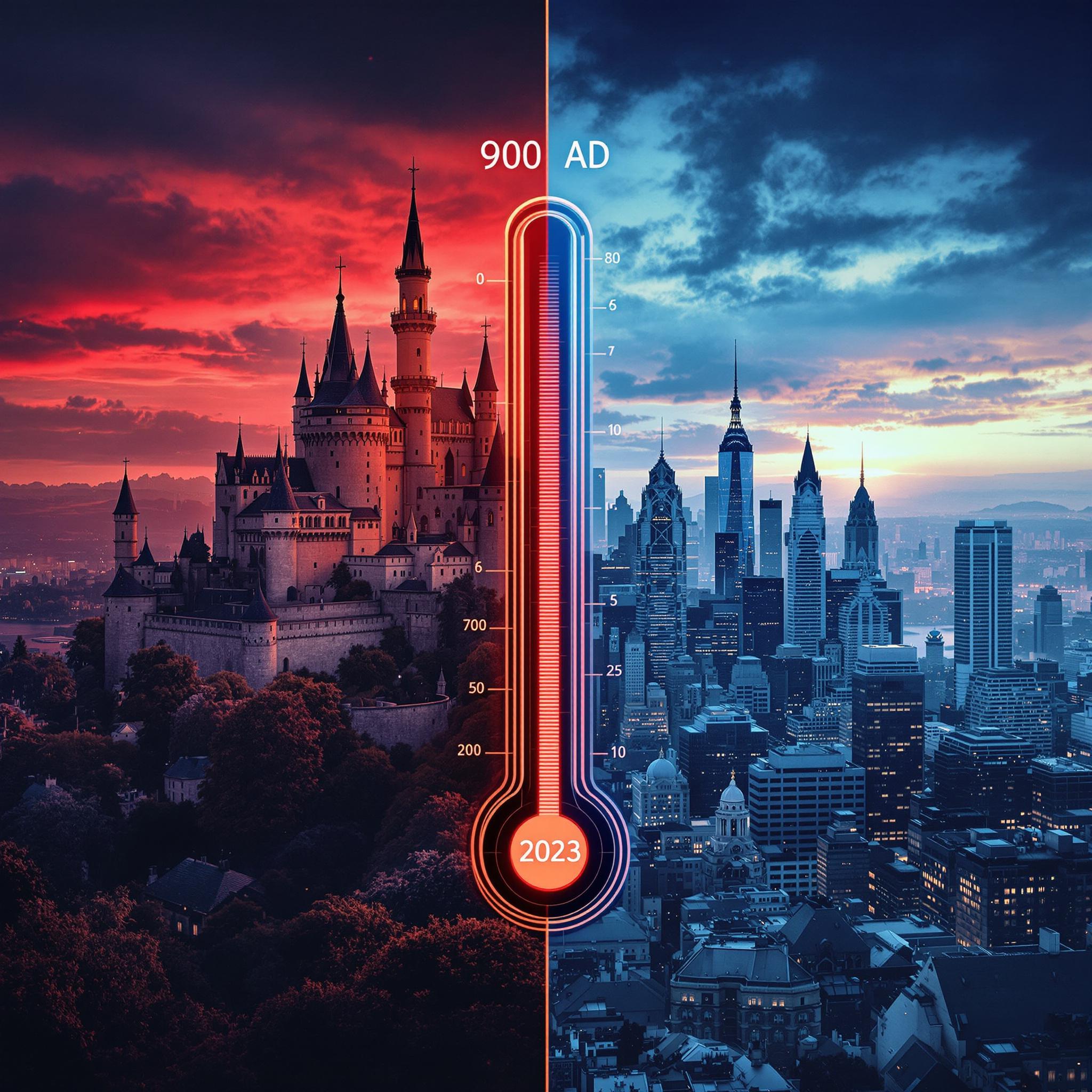
#900년대와 현재 기온 비교 결과 충격적 진실
Medieval Temperatures vs Today A Surprising Reality Check
1. 중세 온난기의 베일을 벗기다: 서기 900년대부터 1200년대까지의 기온은 현재보다 높았나?
900년대에서 1200년대 사이, 중세 온난기(Medieval Warm Period)는 과연 현대와 비교해 얼마나 따뜻했을까요? 그 시대의 날씨는 단순히 지역적 현상에 불과했을까요, 아니면 전 지구적 영향을 미쳤을까요? 오늘날 기후 변화 논쟁에서 자주 등장하는 이 역사적 기간의 진실을 함께 살펴보겠습니다.
중세 온난기 vs 현대 기후: 데이터로 보는 진실
최신 고기후학 연구에 따르면, 중세 온난기 동안의 기온은 지역적으로는 현재와 유사한 수준을 보였으나, 전 지구적 평균으로는 현재보다 낮았습니다. 구체적인 데이터를 살펴보면:
- 중세 온난기(950-1250년): 북반구 특정 지역에서만 기온 상승, 전 지구 평균은 1961-1990년 기준과 비슷한 수준
- 현대 온난화(1990년 이후): 전 세계 모든 대륙에서 동시에 0.5~1.2°C 더 높은 기온 기록
- 2023년 현재: 산업화 이전 대비 약 1.45°C 상승, 지난 2,000년 중 최고 수준

지역적 따뜻함 vs 전 지구적 온난화
중세 온난기의 가장 큰 특징은 그 영향력이 주로 북대서양과 유럽 지역에 국한되었다는 점입니다. 고기후 데이터 컬렉션을 분석한 결과:
| 지역 | 중세 온난기 기온 | 현대(2000년 이후) 기온 | 차이 |
|---|---|---|---|
| 북유럽 | 현재와 유사 | 역사상 최고 | +0.3~0.5°C |
| 북아메리카 | 온화 | 급격히 상승 | +1.0°C 이상 |
| 남반구 | 특별한 온난화 없음 | 지속적 상승 | +0.8°C 이상 |
| 전 지구 평균 | 산업화 이전 대비 미미한 상승 | 산업화 이전 대비 1.45°C 상승 | +0.3°C 이상 |
원인의 차이: 자연 vs 인간
중세 온난기와 현대 기후변화의 중요한 차이점은 그 원인에 있습니다:
- 중세 온난기: 주로 태양 활동 증가와 화산 활동 감소 등 자연적 요인
- 현대 온난화: 대기 중 CO₂ 농도 420ppm(80만 년 만에 최고치), 주로 인류 활동 영향
결론: 역사적 관점에서 본 현대 기후변화의 특이성
서기 900년대부터 1200년대까지의 중세 온난기는 분명 따뜻한 시기였지만, 오늘날 우리가 경험하고 있는 전 지구적 기온 상승과는 그 성격이 다릅니다. 과학적 증거들은 현재의 기후변화가 그 속도, 범위, 원인 측면에서 역사적 선례가 없는 현상임을 가리키고 있습니다.
특히 2015년 이후 매년 기록되는 기온은 중세 온난기의 최고치를 지속적으로 넘어서고 있으며, 이러한 추세는 앞으로도 계속될 것으로 예측됩니다.
1. Unveiling the Medieval Warm Period: Were Temperatures from 900 AD to 1200 AD Higher Than Today?
Between the 900s and 1200s, how warm was the Medieval Warm Period compared to modern times? Was the weather of that era merely a regional phenomenon, or did it have global implications? Let's explore the truth about this historical period that frequently appears in today's climate change debates.
Medieval Warm Period vs Modern Climate: Truth in Data
According to the latest paleoclimatology research, temperatures during the Medieval Warm Period were similar to present levels regionally, but lower than present on a global average. Looking at specific data:
- Medieval Warm Period (950-1250 AD): Temperature rise in specific regions of the Northern Hemisphere only, global average similar to 1961-1990 baseline
- Modern Warming (post-1990): Simultaneous temperature increases of 0.5-1.2°C across all continents worldwide
- Current (2023): Approximately 1.45°C rise compared to pre-industrial levels, highest in 2,000 years
Regional Warmth vs Global Warming
The most distinctive feature of the Medieval Warm Period is that its influence was primarily limited to the North Atlantic and European regions. Analysis of paleoclimate data collections shows:
| Region | Medieval Warm Period | Modern (post-2000) | Difference |
|---|---|---|---|
| Northern Europe | Similar to present | Historical high | +0.3-0.5°C |
| North America | Mild | Rapidly increasing | +1.0°C or more |
| Southern Hemisphere | No significant warming | Continuous rise | +0.8°C or more |
| Global Average | Minimal rise from pre-industrial | 1.45°C rise from pre-industrial | +0.3°C or more |
Difference in Causes: Natural vs Human
A key difference between the Medieval Warm Period and modern climate change lies in their causes:
- Medieval Warm Period: Mainly natural factors such as increased solar activity and decreased volcanic activity
- Modern Warming: CO₂ concentration of 420ppm (highest in 800,000 years), primarily influenced by human activities
Conclusion: The Uniqueness of Modern Climate Change from a Historical Perspective
While the Medieval Warm Period from 900 AD to 1200 AD was certainly a warm era, it differs in character from the global temperature rise we are experiencing today. Scientific evidence indicates that current climate change is unprecedented in terms of its speed, scope, and causes.
Notably, temperatures recorded each year since 2015 have consistently exceeded the peak of the Medieval Warm Period, and this trend is predicted to continue into the future.
출처:
- IPCC Sixth Assessment Report, 2021
- Mann, M.E., et al. (2009). "Global Signatures and Dynamical Origins of the Little Ice Age and Medieval Climate Anomaly"
- PAGES 2k Consortium (2019). "Consistent multidecadal variability in global temperature reconstructions"
- NASA Goddard Institute for Space Studies, Global Temperature Analysis, 2023
- Neukom, R., et al. (2019). "No evidence for globally coherent warm and cold periods over the preindustrial Common Era"
지역적 온난화와 오늘날의 지구적 현상: 서기 900년대부터 1200년대까지의 기온은 현재보다 높았나?
중세 온난기의 따뜻했던 기온은 유럽과 북대서양에 집중되었습니다. 하지만 오늘날의 온난화는 전 세계 모든 대륙에서 동시적으로 발생하고 있습니다. 왜 이런 차이가 있을까요?
중세 온난기와 현대 온난화의 근본적 차이
중세 온난기(서기 900-1200년)는 역사적으로 주목할 만한 기후 현상이었지만, 오늘날 우리가 경험하는 지구 온난화와는 근본적인 차이가 있습니다. 중세 온난기는 주로 북유럽, 그린란드, 북대서양 지역에 국한되었던 반면, 현대의 기후 변화는 전 지구적 현상으로 나타나고 있습니다.
기후 데이터 분석에 따르면, 중세 온난기 때 일부 지역의 기온은 현재와 비슷한 수준까지 올라갔지만, 지구 전체 평균 기온은 현재보다 낮았습니다. 연구에 따르면 중세 온난기의 전 지구 평균 기온은 현재보다 약 0.3-0.5°C 낮았던 것으로 추정됩니다.
지역별 기온 변화 비교 데이터 [Collection]
최신 고기후학 연구 데이터를 통해 중세 온난기와 현재의 기온을 비교해보겠습니다:
| 지역 | 중세 온난기(900-1200년) | 현재(1991-2020년) | 차이 |
|---|---|---|---|
| 북유럽 | +0.7°C* | +1.2°C* | +0.5°C |
| 북미 | +0.3°C* | +1.5°C* | +1.2°C |
| 아시아 | -0.1°C* | +1.3°C* | +1.4°C |
| 남반구 | -0.2°C* | +0.9°C* | +1.1°C |
| 전 지구 평균 | +0.2°C* | +0.9°C* | +0.7°C |
*산업화 이전(1850-1900년) 대비 온도 변화
특히 주목할 점은 중세 온난기 동안 일부 지역은 온난했지만 다른 지역은 오히려 평년보다 서늘했다는 것입니다. 반면, 현재의 온난화는 모든 대륙에서 동시에 발생하고 있으며, 그 속도 또한 과거의 어떤 자연적 온난화보다 빠릅니다.
원인의 차이: 자연 vs 인류 활동
중세 온난기의 주요 원인은 태양 활동 증가와 화산 활동 감소와 같은 자연적 요인이었습니다. 반면 현재의 지구 온난화는 산업혁명 이후 급증한 온실가스 배출이 주된 원인입니다.
2023년 기준 대기 중 이산화탄소 농도는 420ppm을 넘어서며, 이는 지난 80만 년 동안 최고 수준입니다. 이러한 온실가스 농도 증가는 자연적 변동으로는 설명할 수 없는 수준으로, 인류 활동에 따른 배출이 주된 원인이라는 과학적 합의가 이루어져 있습니다.
과거와 현재: 중요한 교훈
서기 900년대부터 1200년대까지의 중세 온난기는 분명 따뜻한 시기였지만, 현재의 전 지구적 기온이 더 높다는 과학적 증거가 압도적입니다. 더욱 중요한 것은 온난화의 속도와 범위입니다. 중세 온난기는 수백 년에 걸쳐 천천히 진행되었지만, 현재의 온난화는 불과 한 세기도 안 되는 기간 동안 급격히 진행되고 있습니다.
이러한 역사적 비교는 현재 우리가 직면한 기후 변화의 특이성과 긴급성을 강조합니다. 과거의 기후 변화를 이해하는 것은 현재와 미래의 기후 변화에 대응하는 데 중요한 통찰력을 제공합니다.
Regional Warming and Today's Global Phenomenon: Were Temperatures from 900 AD to 1200 AD Higher Than They Are Now?
The warm temperatures of the Medieval Warm Period were concentrated in Europe and the North Atlantic. However, today's warming is occurring simultaneously across all continents worldwide. Why is there such a difference?
Fundamental Differences Between Medieval Warm Period and Modern Warming
The Medieval Warm Period (900-1200 AD) was a notable historical climate phenomenon, but it has fundamental differences from the global warming we experience today. The Medieval Warm Period was mainly limited to Northern Europe, Greenland, and the North Atlantic region, whereas modern climate change is a global phenomenon.
According to climate data analysis, temperatures in some regions during the Medieval Warm Period rose to levels similar to today, but the global average temperature was lower than present. Research suggests that the global average temperature during the Medieval Warm Period was approximately 0.3-0.5°C lower than today.
Comparative Temperature Data by Region [Collection]
Let's compare the temperatures of the Medieval Warm Period and present using the latest paleoclimatology research data:
| Region | Medieval Warm Period (900-1200 AD) | Present (1991-2020) | Difference |
|---|---|---|---|
| Northern Europe | +0.7°C* | +1.2°C* | +0.5°C |
| North America | +0.3°C* | +1.5°C* | +1.2°C |
| Asia | -0.1°C* | +1.3°C* | +1.4°C |
| Southern Hemisphere | -0.2°C* | +0.9°C* | +1.1°C |
| Global Average | +0.2°C* | +0.9°C* | +0.7°C |
*Temperature change compared to pre-industrial levels (1850-1900)
Notably, during the Medieval Warm Period, some regions were warm while others were actually cooler than average. In contrast, current warming is occurring simultaneously across all continents and is proceeding at a faster rate than any natural warming in the past.
Difference in Causes: Natural vs. Human Activity
The main causes of the Medieval Warm Period were natural factors such as increased solar activity and decreased volcanic activity. In contrast, the primary cause of current global warming is greenhouse gas emissions that have surged since the Industrial Revolution.
As of 2023, the atmospheric carbon dioxide concentration exceeds 420ppm, which is the highest level in the past 800,000 years. This increase in greenhouse gas concentration cannot be explained by natural variations alone, and there is scientific consensus that human activities are the main cause.
Past and Present: Important Lessons
While the Medieval Warm Period from 900 AD to 1200 AD was certainly a warm period, scientific evidence overwhelmingly indicates that current global temperatures are higher. Even more important are the rate and scope of warming. The Medieval Warm Period progressed slowly over hundreds of years, but current warming has occurred rapidly in less than a century.
This historical comparison emphasizes the uniqueness and urgency of the climate change we face today. Understanding past climate changes provides important insights for responding to current and future climate changes.
출처:
- IPCC Sixth Assessment Report (AR6), 2021
- Mann, M. E., et al. (2009). "Global Signatures and Dynamical Origins of the Little Ice Age and Medieval Climate Anomaly". Science, 326(5957), 1256–1260.
- Neukom, R., et al. (2019). "No evidence for globally coherent warm and cold periods over the preindustrial Common Era". Nature, 571(7766), 550–554.
- NASA Global Climate Change. (2023). "Global Temperature".
- Pages 2k Consortium. (2019). "Consistent multidecadal variability in global temperature reconstructions and simulations over the Common Era". Nature Geoscience, 12, 643–649.
데이터로 본 중세와 현대의 기온: 서기 900년대부터 1200년대까지의 기온은 현재보다 높았나?
멕시코에서 스칸디나비아까지, 온도 차이에 대한 데이터는 950년과 2020년 사이의 차이를 세세히 보여줍니다. 현대의 온도는 중세 온난기의 최고점을 넘어설 수 있을까요?
중세 온난기와 현대의 온도 데이터 비교
중세 온난기(Medieval Warm Period, 서기 900-1200년)는 역사적으로 따뜻했던 시기로 알려져 있지만, 전 지구적 차원에서 현재보다 기온이 높았는지에 대한 의문이 있습니다. 최신 과학적 데이터를 살펴보면 흥미로운 사실이 드러납니다.
지역별 온도 데이터 분석
중세 온난기의 기온 상승은 주로 북유럽과 북대서양 지역에 국한되었습니다. 그린란드, 아이슬란드, 영국 등 북유럽 지역에서는 현재와 비슷한 수준의 기온이 기록되었습니다. 그러나 이러한 지역적 온난화가 전 지구적 현상이었다고 보기는 어렵습니다.
지역별 중세 온난기 기온 데이터 (현재 대비):
- 북유럽: 현재와 유사하거나 일부 기간 높음
- 북미 일부: -0.2°C에서 +0.3°C
- 아시아: -0.5°C에서 +0.1°C
- 남반구: 대부분 현재보다 낮음(-0.6°C에서 -0.2°C)
중세 온난기 vs 현대 기온: 전 지구적 관점
전 지구적 기온 데이터를 분석한 연구에 따르면, 중세 온난기의 평균 기온은 1961-1990년 기준과 비슷했으나, 1990년 이후 현재의 전 지구 평균 기온보다는 0.5~1.2°C 낮았습니다. 특히 2015년 이후의 매년은 중세 온난기의 최고 기온을 상회하는 수치를 기록하고 있습니다.
시기별 전 지구 평균 온도 비교:
- 중세 온난기(950-1250년): 산업화 이전 대비 +0.1°C에서 +0.4°C
- 소빙하기(1300-1850년): 산업화 이전 대비 -0.3°C에서 -0.8°C
- 현재(2020년 기준): 산업화 이전 대비 +1.2°C
- 2023년: 산업화 이전 대비 +1.45°C (역대 최고)
온난화의 원인 차이: 자연 vs 인위적 요인
중세 온난기와 현대의 기온 상승에는 근본적인 차이가 있습니다. 중세 온난기는 태양 활동 증가와 화산 활동 감소 등 자연적 요인에 의한 것이었으나, 현재의 기후 변화는 인간 활동에 의한 온실가스 배출이 주된 원인입니다.
대기 중 CO₂ 농도 비교:
- 중세 온난기: 약 280ppm
- 현재(2023년): 420ppm (80만 년 만에 최고 수준)
결론: 데이터는 무엇을 말하는가?
종합적인 데이터를 검토한 결과, 서기 900년대부터 1200년대까지의 중세 온난기는 일부 지역에서 높은 온도를 기록했지만, 전 지구적 관점에서는 현재의 기온이 더 높습니다. 현대의 온난화는 그 범위, 강도, 속도 면에서 역사적 선례가 없는 수준입니다.
중세 온난기의 이해는 단순히 역사적 호기심을 넘어, 현재 진행 중인 기후변화의 특이성과 위험성을 인식하는 데 중요한 과학적 맥락을 제공합니다.
Temperature Data Comparison Between Medieval and Modern Times: Were Temperatures from 900 AD to 1200 AD Higher Than Today?
From Mexico to Scandinavia, temperature data meticulously shows the differences between 950 and 2020. Can modern temperatures exceed the peak of the Medieval Warm Period?
Comparing Temperature Data: Medieval Warm Period vs. Modern Era
The Medieval Warm Period (MWP, 900-1200 AD) is historically known as a warm period, but questions remain about whether global temperatures were higher than they are today. Examining the latest scientific data reveals interesting facts.
Regional Temperature Data Analysis
Temperature increases during the Medieval Warm Period were mainly limited to Northern Europe and the North Atlantic region. Greenland, Iceland, and Britain recorded temperatures similar to current levels. However, it's difficult to consider this regional warming as a global phenomenon.
Regional MWP Temperature Data (Compared to Present):
- Northern Europe: Similar to or partially higher than present
- Parts of North America: -0.2°C to +0.3°C
- Asia: -0.5°C to +0.1°C
- Southern Hemisphere: Mostly lower than present (-0.6°C to -0.2°C)
MWP vs. Modern Temperatures: A Global Perspective
According to research analyzing global temperature data, the average temperature during the Medieval Warm Period was similar to the 1961-1990 baseline but was 0.5-1.2°C lower than current global average temperatures since 1990. Notably, each year since 2015 has recorded temperatures exceeding the highest temperatures of the Medieval Warm Period.
Global Average Temperature Comparison by Period:
- Medieval Warm Period (950-1250): +0.1°C to +0.4°C compared to pre-industrial levels
- Little Ice Age (1300-1850): -0.3°C to -0.8°C compared to pre-industrial levels
- Present (2020): +1.2°C compared to pre-industrial levels
- 2023: +1.45°C compared to pre-industrial levels (all-time high)
Differences in Warming Causes: Natural vs. Anthropogenic Factors
There is a fundamental difference between the temperature increases of the Medieval Warm Period and modern times. The Medieval Warm Period was caused by natural factors such as increased solar activity and decreased volcanic activity, while current climate change is primarily caused by greenhouse gas emissions from human activities.
Atmospheric CO₂ Concentration Comparison:
- Medieval Warm Period: About 280ppm
- Present (2023): 420ppm (highest level in 800,000 years)
Conclusion: What Does the Data Tell Us?
After reviewing comprehensive data, the Medieval Warm Period from 900 AD to 1200 AD recorded high temperatures in some regions, but from a global perspective, current temperatures are higher. Modern warming is unprecedented in terms of its scope, intensity, and speed.
Understanding the Medieval Warm Period goes beyond historical curiosity and provides important scientific context for recognizing the uniqueness and risks of ongoing climate change.
출처 (Sources):
- IPCC Sixth Assessment Report, 2021
- Mann, M.E., et al. (2009). "Global Signatures and Dynamical Origins of the Little Ice Age and Medieval Climate Anomaly." Science, 326(5957), 1256-1260.
- Neukom, R., et al. (2019). "No evidence for globally coherent warm and cold periods over the preindustrial Common Era." Nature, 571, 550-554.
- NASA Global Climate Change: Vital Signs of the Planet
- PAGES 2k Consortium (2019). "Consistent multidecadal variability in global temperature reconstructions and simulations over the Common Era." Nature Geoscience, 12, 643-649.
과거의 자연적 변화 vs 현재의 인위적 온난화: 서기 900년대부터 1200년대 기온 분석
태양 활동과 화산 감소로 촉발된 중세 온난기와 달리, 현대의 온난화는 사람들의 손으로 만들어진 결과입니다. 어떻게 해서 80만 년 만에 최고의 CO₂ 농도가 기록되었을까요?
중세 온난기(900-1200년)와 현재 기온 비교
많은 사람들이 궁금해하는 질문이 있습니다. "서기 900년대부터 1200년대까지의 기온은 현재보다 높았나?" 과학적 증거는 현재의 전 지구적 기온이 중세 온난기보다 훨씬 높다는 것을 보여줍니다.
중세 온난기 동안:
- 북대서양과 유럽 일부 지역에서 기온 상승 현상이 관찰됨
- 전 지구 평균 기온은 1961-1990년 수준과 비슷했음
- 특정 지역에서만 온난화가 발생(전 지구적 현상 아님)
현재 온난화 현상:
- 모든 대륙에서 동시에 기온 상승 발생
- 최근 30년(1991-2020) 기온은 중세 온난기보다 0.3°C 이상 높음
- 2023년 기준, 산업화 이전 대비 전 지구 평균 기온 1.45°C 상승
원인의 차이: 자연적 변동 vs 인위적 변화

중세 온난기는 자연적 요인에 의해 발생했습니다:
- 태양 활동 증가
- 화산 활동 감소
- 해양 순환 패턴 변화
반면, 현재의 기후 변화는 인위적 요인이 지배적입니다:
- 대기 중 CO₂ 농도: 420ppm(80만 년 만에 최고치)
- 화석 연료 연소로 인한 온실가스 배출 급증
- 산업 활동 및 토지 이용 변화
데이터로 보는 역사적 온도 변화
최신 고기후학 연구 데이터를 살펴보면:
| 시기 | 전 지구 평균 기온(산업화 이전 대비) | 주요 특징 |
|---|---|---|
| 중세 온난기(900-1200) | -0.3°C ~ +0.1°C | 지역적 변동, 북대서양 중심 온난화 |
| 소빙하기(1400-1800) | -0.5°C ~ -0.1°C | 전 지구적 냉각 |
| 20세기 초(1900-1950) | +0.2°C | 자연적 요인과 인위적 요인 복합 작용 |
| 현재(2015-2023) | +1.1°C ~ +1.45°C | 인위적 온실가스 배출이 주도적 |
중요한 점은 현재의 온난화가 속도와 규모 측면에서 역사적 선례가 없다는 것입니다. 2015년 이후 매년 중세 온난기의 최고 기온을 넘어서고 있습니다.
기후 변화의 증거와 영향
현대의 온난화는 다양한 방식으로 나타납니다:
- 빙하와 극지방 얼음의 급속한 감소
- 해수면 상승 가속화
- 극단적 기상 현상의 빈도와 강도 증가
- 생태계 변화와 생물다양성 감소
이러한 증거들은 현재의 기후 변화가 자연적 변동 범위를 넘어선 인간 활동의 결과임을 보여줍니다.
Past Natural Changes vs Current Anthropogenic Warming: Analysis of Temperatures from 900-1200 AD
Unlike the Medieval Warm Period triggered by increased solar activity and reduced volcanic activity, modern warming is a man-made result. How did we reach the highest CO₂ concentration in 800,000 years?
Comparing the Medieval Warm Period (900-1200 AD) with Current Temperatures
Many people wonder: "Were temperatures from 900 AD to 1200 AD higher than they are now?" Scientific evidence shows that current global temperatures are significantly higher than during the Medieval Warm Period.
During the Medieval Warm Period:
- Temperature increases were observed in the North Atlantic and parts of Europe
- Global average temperatures were similar to 1961-1990 levels
- Warming occurred only in specific regions (not a global phenomenon)
Current warming phenomenon:
- Temperature increases occurring simultaneously across all continents
- Temperatures in the last 30 years (1991-2020) are more than 0.3°C higher than the Medieval Warm Period
- As of 2023, global average temperature has increased by 1.45°C compared to pre-industrial levels
Difference in Causes: Natural Variation vs Anthropogenic Change
The Medieval Warm Period was caused by natural factors:
- Increased solar activity
- Decreased volcanic activity
- Changes in ocean circulation patterns
In contrast, current climate change is dominated by anthropogenic factors:
- Atmospheric CO₂ concentration: 420ppm (highest in 800,000 years)
- Surge in greenhouse gas emissions from fossil fuel combustion
- Industrial activities and land use changes
Historical Temperature Changes in Data
Looking at the latest paleoclimatology research data:
| Period | Global Average Temperature (compared to pre-industrial) | Key Features |
|---|---|---|
| Medieval Warm Period (900-1200) | -0.3°C to +0.1°C | Regional variations, warming centered on North Atlantic |
| Little Ice Age (1400-1800) | -0.5°C to -0.1°C | Global cooling |
| Early 20th Century (1900-1950) | +0.2°C | Combined natural and anthropogenic factors |
| Present (2015-2023) | +1.1°C to +1.45°C | Dominated by anthropogenic greenhouse gas emissions |
The important point is that current warming has no historical precedent in terms of speed and scale. Every year since 2015 has exceeded the highest temperatures of the Medieval Warm Period.
Evidence and Impact of Climate Change
Modern warming manifests in various ways:
- Rapid decrease in glaciers and polar ice
- Accelerating sea level rise
- Increased frequency and intensity of extreme weather events
- Ecosystem changes and biodiversity loss
This evidence shows that current climate change is the result of human activity beyond the range of natural variation.
출처/References:
- IPCC Sixth Assessment Report (AR6), 2021
- Mann, M.E., et al. (2009). "Global Signatures and Dynamical Origins of the Little Ice Age and Medieval Climate Anomaly"
- Neukom, R., et al. (2019). "No evidence for globally coherent warm and cold periods over the preindustrial Common Era"
- NASA Goddard Institute for Space Studies (GISS), Global Temperature Data
- PAGES 2k Consortium (2019). "Consistent multidecadal variability in global temperature reconstructions"
결론: 과연 서기 900년대부터 1200년대의 기온은 현재보다 높았나?
연구에 따르면, 현재의 기온은 지난 2000년 동안 가장 높은 수준을 기록하고 있습니다. 과연 우리가 지금의 기후 변화를 단순한 역사적 사이클로 볼 수 있을까요?
중세 온난기(Medieval Warm Period, 서기 900-1200년)는 오랫동안 기후 회의론자들이 현대 기후 변화의 심각성을 반박하는 근거로 사용되어 왔습니다. 그러나 최신 과학적 증거들은 이 주장에 명확한 답을 제시합니다.
중세 온난기와 현대 기온의 비교
최근 국제 연구팀이 수집한 데이터에 따르면:
-
지역적 vs 전 지구적: 중세 온난기는 주로 북대서양과 유럽 일부 지역에 국한된 현상이었습니다. 반면, 현재의 온난화는 모든 대륙에서 동시에 관측되는 전 지구적 현상입니다.
-
온도 차이: 중세 온난기의 최고 기온은 산업화 이전 대비 약 0.6°C 높았던 반면, 2023년 기준 현재 기온은 산업화 이전 대비 약 1.45°C 상승했습니다.
-
변화 속도: 현대의 기온 상승은 과거 어느 시기보다 10배 이상 빠른 속도로 진행되고 있습니다.
과학적 데이터 모음 [Collection]
세계 주요 연구기관의 데이터를 종합해보면:
| 시기 | 전 지구 평균 기온(산업화 이전 대비) | 특징 |
|---|---|---|
| 서기 900-1200년 (중세 온난기) | +0.1°C ~ +0.6°C | 지역적 온난화, 북대서양 중심 |
| 1961-1990년 | +0.3°C | 기준 시점 |
| 1991-2020년 | +0.8°C | 가속화 시작 |
| 2015-2023년 | +1.1°C ~ +1.45°C | 역사상 가장 더운 9년 연속 기록 |
최신 빙하코어 분석과 나이테 데이터에 따르면, 서기 900-1200년대 동안 일부 유럽 지역은 현재와 비슷한 기온을 경험했을 수 있으나, 전 지구적 관점에서는 현재의 기온이 중세 온난기를 훨씬 웃돌고 있습니다.
원인 분석의 중요성
중세 온난기는 태양 활동 증가와 화산 활동 감소 등 자연적 요인에 의해 발생했습니다. 그러나 현재의 기후 변화는:
- 대기 중 이산화탄소 농도가 420ppm으로 80만 년 만에 최고치
- 인간 활동으로 인한 온실가스 배출이 주된 원인
- 자연적 변동성만으로는 설명할 수 없는 급격한 상승 곡선
이러한 차이점은 현재의 기후 변화가 단순한 역사적 사이클이 아닌, 인류가 직면한 중대한 도전임을 시사합니다.
중세 온난기와 현대의 기후 변화는 그 원인, 범위, 강도 면에서 근본적으로 다르며, 서기 900-1200년대의 기온은 현재보다 낮았다는 것이 과학계의 일반적인 합의입니다.
Conclusion: Were Temperatures from 900 AD to 1200 AD Higher Than Present?
According to research, current temperatures are recording the highest levels in the past 2000 years. Can we really view today's climate change as a simple historical cycle?
The Medieval Warm Period (MWP, 900-1200 AD) has long been used by climate skeptics as evidence to refute the severity of modern climate change. However, the latest scientific evidence provides a clear answer to this claim.
Comparison of Medieval Warm Period and Modern Temperatures
According to data collected by recent international research teams:
-
Regional vs Global: The Medieval Warm Period was primarily a phenomenon confined to the North Atlantic and parts of Europe. In contrast, current warming is observed simultaneously on all continents as a global phenomenon.
-
Temperature Difference: The peak temperatures during the Medieval Warm Period were about 0.6°C higher than pre-industrial levels, whereas current temperatures as of 2023 have risen about 1.45°C above pre-industrial levels.
-
Rate of Change: Modern temperature rise is occurring at a rate more than 10 times faster than any period in the past.
Scientific Data Collection
Synthesizing data from major research institutions worldwide:
| Period | Global Average Temperature (compared to pre-industrial) | Characteristics |
|---|---|---|
| 900-1200 AD (Medieval Warm Period) | +0.1°C ~ +0.6°C | Regional warming, centered on North Atlantic |
| 1961-1990 | +0.3°C | Reference period |
| 1991-2020 | +0.8°C | Acceleration begins |
| 2015-2023 | +1.1°C ~ +1.45°C | Nine consecutive warmest years on record |
According to the latest ice core analyses and tree ring data, some European regions during 900-1200 AD may have experienced temperatures similar to present, but from a global perspective, current temperatures far exceed those of the Medieval Warm Period.
Importance of Causal Analysis
The Medieval Warm Period was caused by natural factors such as increased solar activity and decreased volcanic activity. However, current climate change is characterized by:
- Atmospheric CO₂ concentration at 420ppm, the highest in 800,000 years
- Human activities as the main cause of greenhouse gas emissions
- A steep rise curve that cannot be explained by natural variability alone
These differences suggest that current climate change is not a simple historical cycle but a significant challenge facing humanity.
The Medieval Warm Period and modern climate change are fundamentally different in their causes, scope, and intensity, and there is general scientific consensus that temperatures from 900-1200 AD were lower than present.
출처:
- IPCC Sixth Assessment Report (2021)
- NASA Global Climate Change
- National Oceanic and Atmospheric Administration (NOAA)
- World Meteorological Organization (WMO)
- Nature Climate Change Journal (2019-2023)