#Sleep Experts Warn Against Daylight Savings 2025 Health Risks
The Power of Time Adjustment: Understanding Daylight Savings 2025
Every March, our clocks engage in a peculiar dance with time. As we approach the spring of 2025, this ritual of adjusting our timepieces raises an intriguing question: why do we continue this practice?
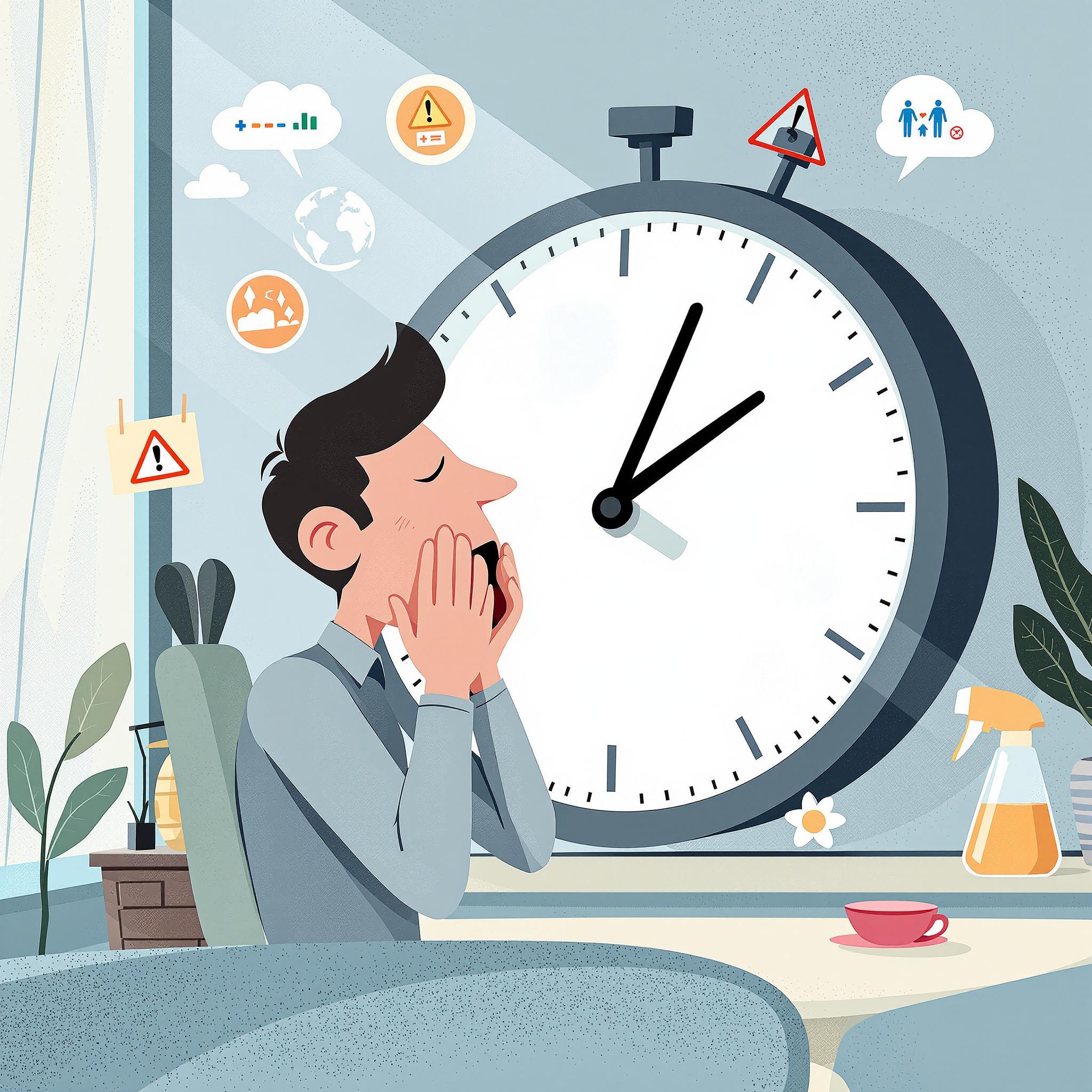
The upcoming daylight savings 2025 transition is scheduled for Sunday, March 9, at 2 a.m. local time. This annual spring forward ritual, where we lose an hour of sleep but gain an extra hour of evening sunlight, has been a part of our lives for over a century. But what makes this particular time change significant?
Impact on Daily Life
The shift to daylight savings time in 2025 will affect millions of Americans in various ways:
- Extended evening daylight for outdoor activities
- Later sunrise times affecting morning routines
- Automatic updates for digital devices
- Manual adjustments needed for analog timepieces
Health Considerations
Recent medical research has highlighted some concerning trends associated with the transition. The days following the spring time change show:
- Increased risk of cardiovascular events
- Higher rates of traffic accidents
- Disrupted sleep patterns
- Temporary cognitive impairment
Public Sentiment and Legislative Movement
The landscape of public opinion regarding daylight savings is shifting dramatically. Current polls indicate that 54% of Americans now prefer year-round standard time, a significant change from the 73% who supported DST in 1999. This evolving perspective has sparked legislative discussions, including the Sunshine Protection Act, which aims to make daylight savings time permanent.
Preparing for the Change
To minimize disruption during the daylight savings 2025 transition, consider:
- Adjusting sleep schedules gradually before the change
- Setting manual clocks before going to bed
- Being extra vigilant while driving during the adjustment period
- Maintaining regular meal and exercise times
This time adjustment tradition continues to spark debate and discussion, highlighting the complex relationship between our modern society and the measurement of time itself.
The Hidden Costs of Daylight Savings 2025: Health and Social Impact
As we approach the daylight savings 2025 transition, the promise of longer evenings might seem appealing at first glance. However, beneath this seemingly beneficial change lies a concerning reality that deserves our attention. Recent medical studies have unveiled a darker side to this biannual ritual.
The Immediate Health Impact
The hour we lose during the spring transition of 2025 comes with significant health risks:
- Increased heart attack incidents in the week following the change
- Higher rates of ischemic stroke
- Elevated numbers of workplace injuries
- Spike in traffic accidents due to sleep deprivation
Sleep Disruption and Cognitive Function
The seemingly minor one-hour shift disrupts our circadian rhythms more severely than many realize:
- Decreased cognitive performance for up to two weeks
- Reduced productivity in the workplace
- Increased instances of mental health issues
- Disrupted sleep patterns affecting both adults and children
Statistical Evidence
The numbers tell a compelling story:
- 6% increase in fatal traffic accidents in the first week
- 24% higher risk of heart attacks on the Monday following the change
- 8% rise in stroke risk during the initial 48 hours
Expert Opinions
Sleep specialists and health organizations increasingly advocate for abolishing the time change:
- The American Academy of Sleep Medicine supports year-round standard time
- Medical researchers emphasize the biological cost of forcing unnatural sleep schedules
- Public health experts question whether the benefits outweigh the documented risks
The debate around daylight savings 2025 extends beyond mere convenience. While longer evening daylight might benefit certain sectors of the economy, the mounting evidence of adverse health effects raises serious questions about the wisdom of maintaining this century-old practice.
The Social Divide: Public Opinion and Debate Over Daylight Savings 2025
As we approach daylight savings 2025, a striking divide emerges in public opinion. Recent Gallup polls reveal a significant shift in Americans' perspectives, with 54% now favoring year-round standard time – a dramatic reversal from 1999 when 73% supported DST. What's driving this change in public sentiment?
The Growing Opposition Movement
The anti-DST movement has gained considerable momentum, backed by:
- Sleep scientists highlighting disrupted circadian rhythms
- Healthcare professionals citing increased health risks
- Safety experts pointing to higher accident rates
- Parents concerned about children's sleep patterns
Legislative Battlegrounds
The Sunshine Protection Act, championed by Sen. Rick Scott and Rep. Vern Buchanan, represents the latest attempt to settle this debate legislatively. This bill aims to make DST permanent, despite growing public preference for standard time. The disconnect between legislative efforts and public opinion raises important questions about who really benefits from these time changes.
Economic Interests vs. Public Health
The debate isn't just about personal preference. Various stakeholders have vested interests:
- Retail businesses favor extended daylight hours
- Healthcare providers advocate for standard time
- Energy companies present mixed positions
- Tourism industry generally supports DST
Regional Variations
The patchwork of DST observance across the U.S. further complicates matters:
- Hawaii and most of Arizona opt out entirely
- Border states face unique challenges
- Native American territories follow different rules
- U.S. territories maintain standard time year-round
As we look ahead to the spring transition in 2025, this ongoing debate reminds us that even something as fundamental as time itself can become a source of social division. The question remains: will public opinion eventually force a permanent solution, or will we continue this biannual ritual of changing our clocks?
The Historical Origins of Daylight Savings 2025: A Journey Through Time
Did Benjamin Franklin really conceive the idea of changing our clocks? While he's often credited with this innovative concept, the true story behind Daylight Saving Time (DST) is far more fascinating and complex than most people realize.
The genesis of what would eventually become our modern daylight savings 2025 schedule actually begins with a passionate New Zealand entomologist named George Hudson. In 1895, Hudson proposed a revolutionary two-hour time shift, primarily to allow himself more daylight hours to study insects after his regular work day. This marks the first formal proposal for what we now know as DST.
However, the implementation of DST wouldn't come until much later, sparked by the pressures of wartime efficiency. Germany made history in 1916 as the first nation to embrace this time-changing practice during World War I. The decision was primarily driven by the need to conserve coal during wartime. The success of this initiative quickly spread across Europe, with other nations following suit.
The United States joined the DST movement in 1918, also during World War I. While Benjamin Franklin's earlier musings about maximizing daylight hours (written somewhat satirically in a letter to the editor of the Journal of Paris in 1784) are often mentioned, his suggestion was more about changing sleep schedules rather than actually adjusting clocks.
The evolution of DST from these early beginnings to its current form – which will next take effect in March 2025 – represents over a century of debate, adjustment, and adaptation. What started as a wartime measure has become a twice-yearly ritual that affects millions of people across the globe, though its necessity continues to be debated in many circles.
Key Historical Milestones:
- 1784: Benjamin Franklin's satirical proposal
- 1895: George Hudson's formal two-hour shift proposal
- 1916: Germany implements the first official DST
- 1918: The United States adopts DST
- Present day: Continuing debate about DST's relevance and effectiveness
This rich history reminds us that as we prepare for daylight savings 2025, we're participating in a tradition that has evolved significantly from its wartime origins to become a complex modern phenomenon that continues to spark discussion and debate worldwide.
Looking Ahead: Is This the End of Daylight Savings 2025 and Beyond?
When November rolls around, we turn our clocks back once again. But as we approach daylight savings 2025, a pressing question emerges: will this tradition continue, or are we witnessing its final chapters?
Recent polls show a significant shift in public sentiment. While 73% of Americans supported DST in 1999, today only 40% maintain that position. The majority now favors abandoning the biannual time changes altogether, with 54% supporting year-round standard time.
The Push for Change
The Sunshine Protection Act, championed by Senator Rick Scott and Representative Vern Buchanan, represents the most serious legislative effort to date. This bill proposes making DST permanent, effectively ending the twice-yearly ritual of clock adjustments. However, the path to change isn't simple:
- Congressional approval is required for any modification
- Health experts largely favor standard time
- International coordination poses significant challenges
- Economic implications need careful consideration
The Health Factor
Medical research increasingly supports ending the time changes. Studies have documented:
- Increased stroke risk
- Higher rates of heart attacks
- More traffic accidents
- Disrupted sleep patterns
- Cognitive impairment
Global Perspective
While the U.S. debates its future with DST, other nations are already taking action. Many European countries are reconsidering their time-change policies, and some regions have already abandoned the practice entirely. This global shift suggests a growing recognition that perhaps the century-old practice has outlived its usefulness.
The Road Ahead
As we look beyond daylight savings 2025, the momentum for change appears unstoppable. Whether we end up with permanent standard time or year-round DST remains to be seen, but one thing is clear: the days of changing our clocks twice a year may be numbered. The question isn't if change will come, but when and in what form.
The future of time measurement awaits our decision. Will we stick to the natural rhythm of standard time, or embrace the extended evening daylight of permanent DST? The answer may come sooner than we think.