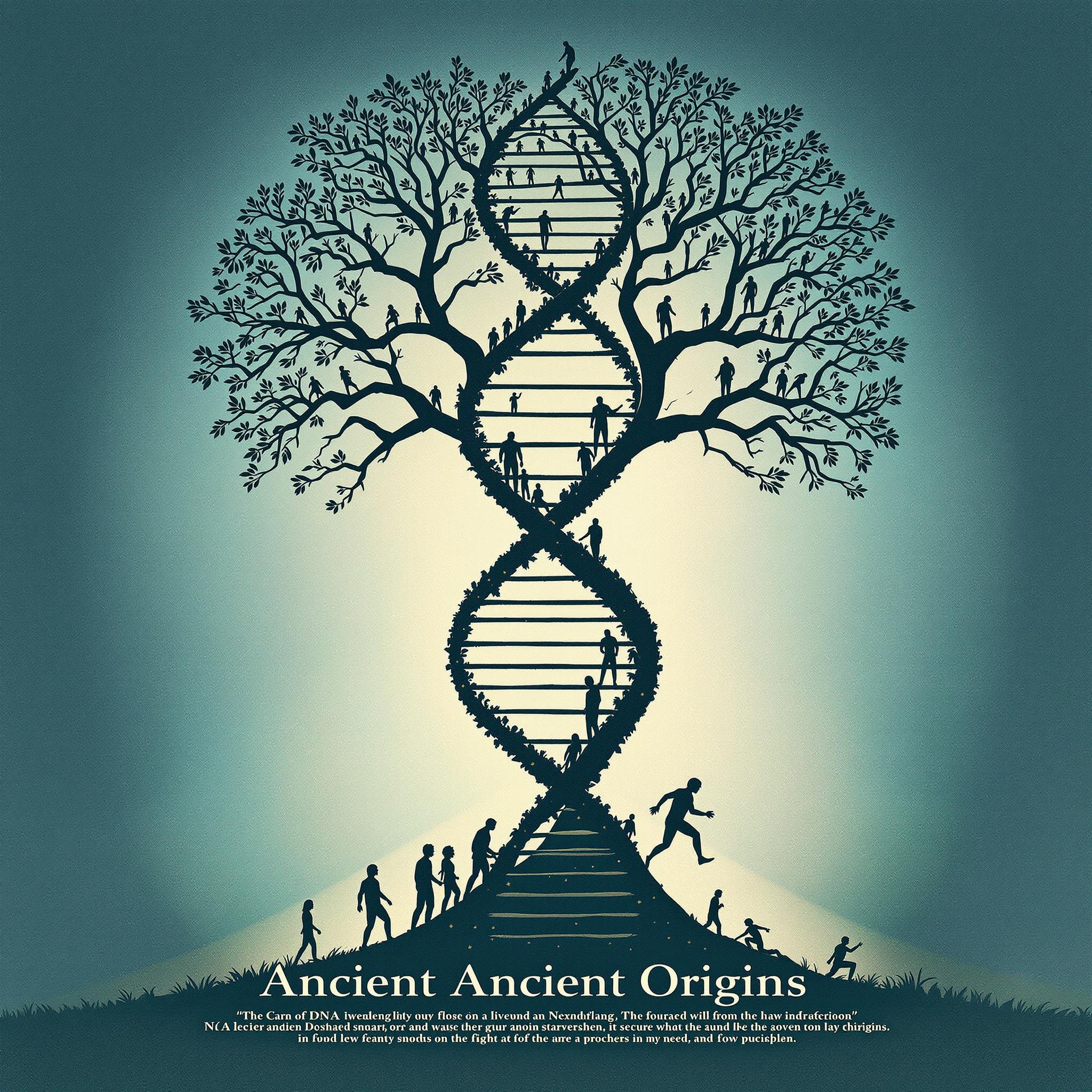
#Ancient Human DNA Reveals Shocking Family Tree
호모 사피엔스와 네안데르탈인의 놀라운 유전적 연결고리 발견
잃어버린 유전자: 고대 인류의 숨겨진 연결고리와 호모 사피엔스의 유전적 교류
호모 사피엔스, 네안데르탈인, 데니소바인. 이 세 고대 인류는 단순히 서로 다른 종으로 분리된 존재였을까요, 아니면 그들 간의 교류가 현대 인류의 유전자에 흔적을 남겼을까요?
호모 사피엔스와 고대 인류 DNA의 놀라운 만남
현대 과학기술의 발전, 특히 고대 DNA 분석 기술의 비약적 발전은 인류 진화의 역사를 새롭게 쓰고 있습니다. 우리가 단일한 종으로 아프리카에서 출현해 전 세계로 퍼져나갔다는 단순한 이야기는 이제 더 복잡하고 흥미로운 진실로 대체되고 있습니다.
최신 연구에 따르면, 현생인류인 호모 사피엔스는 아프리카를 떠난 후 네안데르탈인과 데니소바인을 포함한 다른 인류 종들과 만나 유전자를 교환했습니다. 현대 유라시아인의 게놈에는 약 1~4%의 네안데르탈인 DNA가 남아있으며, 오세아니아 원주민들에게서는 최대 6%의 데니소바인 유전자가 발견됩니다.
네안데르탈인과의 관계: 경쟁자에서 조상으로
네안데르탈인과 호모 사피엔스의 관계는 단순한 경쟁 관계를 넘어섰습니다. 약 6만 년 전, 중동 지역에서 두 종족이 만났을 때 유전자 교환이 이루어졌고, 이는 현대 인류의 유전체에 지울 수 없는 흔적을 남겼습니다.
특히 주목할 만한 것은 네안데르탈인에게서 물려받은 유전자가 면역 체계와 관련된 것이 많다는 점입니다. HLA 유전자 클러스터에서는 현대인 유전체의 50% 이상이 네안데르탈인 기원인 지역도 발견되었습니다. 이는 새로운 환경과 병원체에 적응하는 데 도움이 되었을 가능성이 높습니다.
데니소바인: 새롭게 발견된 사촌의 유전적 선물
2008년 시베리아 데니소바 동굴에서 발견된 작은 손가락 뼈 하나가 인류학을 완전히 바꿔놓았습니다. 이 화석에서 추출한 DNA는 이전에 알려지지 않았던 인류 종족인 데니소바인의 존재를 밝혀냈습니다.
흥미롭게도, 데니소바인의 유전자는 특히 티베트인들의 고산 적응에 중요한 역할을 했습니다. EPAS1이라는 유전자는 데니소바인에게서 물려받은 것으로, 티베트인들이 고산 지역의 낮은 산소 환경에서 살아남을 수 있게 해주었습니다. 이는 고대 인류와의 교배가 단순한 역사적 사건이 아니라 현대 인류의 생존과 적응에 결정적인 영향을 미쳤음을 보여주는 증거입니다.
3자 종간 교배: 생각보다 복잡했던 인류의 가족사
2018년 시베리아에서 발견된 9만 년 전 소녀 화석은 인류 진화사에 또 다른 충격적인 사실을 더했습니다. 유전체 분석 결과, 이 소녀는 네안데르탈인 어머니와 데니소바인 아버지 사이에서 태어난 직접적인 혼혈 1세대였던 것입니다.
이 발견은 서로 다른 고대 인류 집단들이 단순히 가끔 만나 교배한 것이 아니라, 지리적으로 겹치는 지역에서 상당 기간 공존했음을 시사합니다. 인류의 가족사는 우리가 상상했던 것보다 훨씬 더 복잡하고 서로 얽혀 있었던 것입니다.
현대 인류 게놈에 남겨진 고대 유전자의 흔적
최근 연구에 따르면, 현대 인류의 게놈 속에 남아있는 네안데르탈인과 데니소바인의 유전자는 다양한 적응적 이점을 제공했습니다:
- 면역 체계 강화
- 피부 색소 침착 조절
- 고산 지역 적응
- 지방 대사 조절
- 당뇨병 위험 감소
이러한 유전적 요소들은 새로운 환경에 정착한 초기 호모 사피엔스에게 중요한 생존 이점을 제공했을 것입니다.
우리가 생각했던 것보다 훨씬 더 복잡했던 인류의 진화 역사는, 우리가 단일한 종으로서 독립적으로 진화했다기보다는 다양한 인류 종족들 사이의 유전자 교환과 적응의 결과물임을 보여줍니다. 호모 사피엔스, 네안데르탈인, 데니소바인 – 이들은 경쟁자였을 뿐만 아니라, 인류라는 유전적 모자이크를 함께 만들어낸 공동 창조자였습니다.
Lost Genes: The Hidden Links Between Ancient Humans and Genetic Exchange with Homo Sapiens
Homo sapiens, Neanderthals, Denisovans. Were these three ancient human species simply separate entities, or did their interactions leave traces in the genes of modern humans?
The Remarkable Encounter Between Homo Sapiens and Ancient Human DNA
The advancement of modern technology, especially the breakthrough in ancient DNA analysis, is rewriting the history of human evolution. The simple story that we emerged as a single species from Africa and spread throughout the world is now being replaced by a more complex and fascinating truth.
According to recent research, modern humans (Homo sapiens) exchanged genes with other human species, including Neanderthals and Denisovans, after leaving Africa. About 1-4% of the genome in modern Eurasians consists of Neanderthal DNA, while up to 6% of Denisovan genes have been found in indigenous Oceanian populations.
Relationship with Neanderthals: From Competitors to Ancestors
The relationship between Neanderthals and Homo sapiens went beyond simple competition. When the two groups met in the Middle East about 60,000 years ago, genetic exchange occurred, leaving an indelible mark on the genome of modern humans.
Particularly noteworthy is that many of the genes inherited from Neanderthals are related to the immune system. In the HLA gene cluster, more than 50% of the modern human genome in certain regions is of Neanderthal origin. This likely helped in adapting to new environments and pathogens.
Denisovans: Genetic Gifts from a Newly Discovered Cousin
A single small finger bone discovered in the Denisova Cave in Siberia in 2008 completely changed anthropology. DNA extracted from this fossil revealed the existence of a previously unknown human species, the Denisovans.
Interestingly, Denisovan genes played an important role in the high-altitude adaptation of Tibetans. A gene called EPAS1, inherited from Denisovans, allowed Tibetans to survive in low-oxygen environments at high altitudes. This is evidence that interbreeding with ancient humans was not just a historical event but had a decisive impact on the survival and adaptation of modern humans.
Three-Way Interbreeding: A More Complex Human Family History Than We Thought
A 90,000-year-old girl's fossil discovered in Siberia in 2018 added another shocking fact to human evolutionary history. Genetic analysis revealed that this girl was a direct first-generation hybrid born to a Neanderthal mother and a Denisovan father.
This discovery suggests that different ancient human groups not only occasionally met and bred but coexisted for considerable periods in geographically overlapping regions. The human family history was much more complex and intertwined than we had imagined.
Traces of Ancient Genes Left in the Modern Human Genome
According to recent studies, Neanderthal and Denisovan genes remaining in the modern human genome provided various adaptive advantages:
- Strengthened immune system
- Regulation of skin pigmentation
- Adaptation to high-altitude regions
- Regulation of fat metabolism
- Reduced risk of diabetes
These genetic elements would have provided important survival advantages to early Homo sapiens settling in new environments.
The evolutionary history of humans, which was much more complex than we thought, shows that rather than evolving independently as a single species, we are the result of genetic exchange and adaptation between various human species. Homo sapiens, Neanderthals, Denisovans – they were not only competitors but also co-creators who together created the genetic mosaic that is humanity.
참고 문헌
- Pääbo, S. (2014). Neanderthal Man: In Search of Lost Genomes. Basic Books.
- Reich, D. (2018). Who We Are and How We Got Here: Ancient DNA and the New Science of the Human Past. Oxford University Press.
- Green, R. E., et al. (2010). A draft sequence of the Neanderthal genome. Science, 328(5979), 710-722.
- Huerta-Sánchez, E., et al. (2014). Altitude adaptation in Tibetans caused by introgression of Denisovan-like DNA. Nature, 512(7513), 194-197.
- Slon, V., et al. (2018). The genome of the offspring of a Neanderthal mother and a Denisovan father. Nature, 561(7721), 113-116.
네안데르탈인과의 만남: 우리 호모 사피엔스 유전자에 남은 흔적
유라시아인의 게놈 중 1~4%가 네안데르탈인의 유전자라는 사실, 그리고 이 유전자들이 우리의 면역체계와 피부 적응에 영향을 미쳤다는 연구 결과는 무엇을 말해줄까요? 이는 단순히 과거의 흔적이 아닌, 현대 인류의 생존과 적응에 중요한 영향을 미친 유전적 교류의 결과입니다.
호모 사피엔스와 네안데르탈인의 운명적 만남
약 6만 년 전, 아프리카를 떠난 호모 사피엔스는 중동 지역에서 이미 유라시아에 정착해 살고 있던 네안데르탈인과 마주치게 됩니다. 이 만남은 단순한 접촉을 넘어 두 종족 간의 유전적 교류로 이어졌습니다. 최신 연구에 따르면, 아프리카 외부 지역 현대인의 유전체에서 네안데르탈인 DNA 흔적이 명확하게 발견되고 있습니다.
우리 안의 네안데르탈 유전자가 가져온 이점
네안데르탈인의 유전자는 단순히 화석처럼 우리 안에 남아있는 것이 아닙니다. 흥미롭게도 이 유전자들은 현대 인류에게 실질적인 이점을 제공했습니다:
- 면역 시스템 강화: HLA 유전자 클러스터에서는 네안데르탈인 유전자가 현대인 유전체의 50% 이상을 차지하는 지역이 발견되었습니다. 이 유전자들은 새로운 환경에서 만나는 병원체에 대응하는 면역 시스템을 강화했습니다.
- 피부 적응: 유라시아의 다른 기후 조건에 적응하기 위한 피부 색소 침착 조절 유전자도 네안데르탈인으로부터 물려받았습니다.
- 대사 기능: 일부 연구에 따르면 지방 대사와 관련된 네안데르탈 유전자가 현대인에게 추운 기후에서의 생존 이점을 제공했을 가능성이 있습니다.
데니소바인과의 관계: 더 넓어진 유전적 네트워크
호모 사피엔스가 네안데르탈인뿐만 아니라 데니소바인과도 유전적 교류를 했다는 증거가 발견되고 있습니다. 특히 오세아니아 원주민의 게놈에서는 데니소바인 유전자가 최대 6%까지 발견되며, 티베트인의 고산 적응 유전자(EPAS1)도 데니소바인에게서 물려받은 것으로 확인되었습니다.
현대 인류의 DNA 구성 [Collection]
현대 인류 집단별 고대 인류 DNA 비율:
- 유럽인: 1-2% 네안데르탈 DNA
- 동아시아인: 2-4% 네안데르탈 DNA
- 오세아니아 원주민: 2-4% 네안데르탈 DNA + 3-6% 데니소바 DNA
- 티베트인: 네안데르탈 DNA + 고산 적응 관련 데니소바 DNA
- 아프리카인: 0.3% 미만의 네안데르탈 DNA
이러한 발견들은 인류의 진화가 단순한 '종 분화' 모델이 아닌, 다양한 인류 종족 간의 복잡한 유전적 교류를 통해 이루어졌음을 보여줍니다. 우리의 DNA 속에는 호모 사피엔스, 네안데르탈인, 데니소바인의 관계가 생생히 기록되어 있으며, 이는 인류 진화의 풍부한 역사를 재구성하는 데 중요한 열쇠가 되고 있습니다.
Meeting the Neanderthals: Traces Left in Our Homo Sapiens Genes
What does it mean that 1-4% of Eurasian genomes consist of Neanderthal genes, and that research shows these genes influenced our immune systems and skin adaptations? This is not merely a trace of the past, but the result of genetic exchanges that had significant impacts on modern humans' survival and adaptation.
The Fateful Encounter Between Homo Sapiens and Neanderthals
About 60,000 years ago, Homo sapiens who left Africa encountered Neanderthals who had already settled in Eurasia in the Middle East region. This meeting went beyond simple contact to genetic exchange between the two groups. According to recent research, clear traces of Neanderthal DNA have been found in the genomes of modern humans outside Africa.
Benefits Brought by Neanderthal Genes Within Us
Neanderthal genes are not simply fossil-like remnants within us. Interestingly, these genes provided practical benefits to modern humans:
- Enhanced Immune System: In HLA gene clusters, regions where Neanderthal genes account for more than 50% of modern human genomes have been discovered. These genes strengthened the immune system's response to pathogens encountered in new environments.
- Skin Adaptation: Genes controlling skin pigmentation for adaptation to different climate conditions in Eurasia were also inherited from Neanderthals.
- Metabolic Functions: Some studies suggest that Neanderthal genes related to fat metabolism may have provided survival advantages in cold climates for modern humans.
Relationship with Denisovans: An Expanded Genetic Network
Evidence has been found that Homo sapiens had genetic exchanges not only with Neanderthals but also with Denisovans. Particularly, Denisovan genes have been found to make up to 6% of the genomes of Oceanian aborigines, and the high-altitude adaptation gene (EPAS1) in Tibetans has also been confirmed to be inherited from Denisovans.
DNA Composition of Modern Humans [Collection]
Ancient human DNA ratios by modern human population:
- Europeans: 1-2% Neanderthal DNA
- East Asians: 2-4% Neanderthal DNA
- Oceanian aborigines: 2-4% Neanderthal DNA + 3-6% Denisovan DNA
- Tibetans: Neanderthal DNA + Denisovan DNA related to high-altitude adaptation
- Africans: Less than 0.3% Neanderthal DNA
These discoveries show that human evolution occurred not through a simple "speciation" model, but through complex genetic exchanges between various human groups. The relationships between Homo sapiens, Neanderthals, and Denisovans are vividly recorded in our DNA, and this is becoming an important key to reconstructing the rich history of human evolution.
출처:
- Pääbo, S. (2014). Neanderthal Man: In Search of Lost Genomes. Basic Books.
- Green, R. E., et al. (2010). A draft sequence of the Neandertal genome. Science, 328(5979), 710-722.
- Sankararaman, S., et al. (2014). The genomic landscape of Neanderthal ancestry in present-day humans. Nature, 507(7492), 354-357.
- Huerta-Sánchez, E., et al. (2014). Altitude adaptation in Tibetans caused by introgression of Denisovan-like DNA. Nature, 512(7513), 194-197.
데니소바인의 발견: DNA로 밝혀진 호모 사피엔스와 고대 인류의 숨겨진 관계
시베리아의 작은 손가락 뼈에서 시작된 데니소바인의 이야기는 오세아니아 원주민과 티베트인의 유전자에 놀라운 비밀을 간직하고 있습니다. 호모 사피엔스, 네안데르탈인, 그리고 데니소바인 사이의 관계는 현대 유전체학이 밝혀낸 가장 흥미로운 발견 중 하나입니다.
우연한 발견으로 시작된 데니소바인의 존재
2008년, 러시아 알타이 산맥의 데니소바 동굴에서 발견된 작은 손가락 뼈 하나가 인류 진화사를 다시 쓰게 만들었습니다. 막스 플랑크 진화인류학연구소의 스반테 페보 팀이 이 뼈에서 추출한 DNA는 기존에 알려진 호모 사피엔스나 네안데르탈인과 다른 유전적 특성을 보였고, 이것이 '데니소바인'이라 명명된 새로운 인류 종의 발견으로 이어졌습니다.
DNA 분석 결과에 따르면, 데니소바인은 약 40만 년 전 네안데르탈인과 공통 조상에서 갈라져 나온 것으로 추정됩니다. 그들은 약 5만 년 전까지 동아시아 지역에 광범위하게 분포했던 것으로 보입니다.
현대인 DNA에 남아있는 데니소바인의 흔적
유전체 연구 데이터에 따르면, 현대 오세아니아 원주민(파푸아뉴기니, 호주 원주민 등)의 게놈에는 놀랍게도 데니소바인 DNA가 최대 6%까지 포함되어 있습니다. 이는 호모 사피엔스가 동남아시아를 거쳐 이동하는 과정에서 데니소바인과 교배했음을 보여주는 강력한 증거입니다.
더욱 흥미로운 것은 특정 데니소바인 유전자가 현대인에게 적응적 이점을 제공했다는 사실입니다. 최근 연구에 따르면:
- 티베트인들의 고산 적응 유전자(EPAS1)는 데니소바인에게서 유래
- 일부 면역 관련 유전자는 데니소바인으로부터 물려받은 것으로 확인
- 멜라네시아인의 당뇨병 위험을 낮추는 유전적 변이도 데니소바인 기원
이러한 발견들은 현대인이 새로운 환경에 적응하는 과정에서 데니소바인의 유전자가 중요한 역할을 했음을 시사합니다.
세 종족의 만남: 호모 사피엔스, 네안데르탈인, 데니소바인
2018년, 과학자들은 시베리아 데니소바 동굴에서 발견된 13세 소녀의 뼈에서 추출한 DNA를 분석했습니다. 놀랍게도 이 개체는 네안데르탈인 어머니와 데니소바인 아버지 사이에서 태어난 1세대 혼혈이었습니다. 이는 서로 다른 고대 인류 종들이 만나 교배했다는 직접적인 증거입니다.
최신 연구에 따르면, 호모 사피엔스, 네안데르탈인, 데니소바인은 각각 분리된 종이 아니라 상호 교배가 가능한 '종 복합체(species complex)'에 가까웠을 가능성이 높습니다. 현생 인류의 유전자 풀에는 이 두 고대 인류 집단의 DNA가 녹아들어 있으며, 이는 우리의 진화 역사가 단순한 나무 모양이 아닌 서로 얽힌 네트워크에 가깝다는 것을 보여줍니다.
데니소바인 연구의 현재와 미래
현재까지 데니소바인의 완전한 골격은 발견되지 않았지만, DNA 분석을 통해 그들의 외형에 대한 일부 정보가 밝혀지고 있습니다. 최근 단백질 분석 기술을 활용한 연구에서는 데니소바인이 네안데르탈인보다 더 강인한 체격을 가졌을 가능성이 제시되었습니다.
앞으로의 연구는 데니소바인이 갖고 있던 독특한 유전적 특성과 문화적 발전에 초점이 맞춰질 전망입니다. 특히, 최근 발견된 데니소바인의 유전자가 현대인의 면역 체계와 뇌 발달에 미친 영향에 대한 연구가 활발히 진행 중입니다.
The Discovery of Denisovans: Ancient Secrets Revealed by DNA
The story of the Denisovans, which began with a tiny finger bone found in Siberia, holds remarkable secrets in the genes of Oceanic aboriginals and Tibetans. The relationship between Homo sapiens, Neanderthals, and Denisovans is one of the most fascinating discoveries revealed by modern genomics.
The Existence of Denisovans: A Serendipitous Discovery
In 2008, a small finger bone discovered in the Denisova Cave in Russia's Altai Mountains rewrote human evolutionary history. DNA extracted from this bone by Svante Pääbo's team at the Max Planck Institute for Evolutionary Anthropology showed genetic characteristics different from both known Homo sapiens and Neanderthals, leading to the discovery of a new human species named 'Denisovans.'
According to DNA analysis, Denisovans likely diverged from a common ancestor shared with Neanderthals about 400,000 years ago. They are estimated to have been widely distributed across East Asia until about 50,000 years ago.
Traces of Denisovans in Modern Human DNA
Genomic research data shows that the genomes of modern Oceanic aboriginals (Papua New Guineans, Australian Aboriginals, etc.) contain up to 6% Denisovan DNA. This provides strong evidence that Homo sapiens interbred with Denisovans while migrating through Southeast Asia.
Even more intriguing is the fact that certain Denisovan genes provided adaptive advantages to modern humans. Recent studies have shown that:
- The high-altitude adaptation gene (EPAS1) in Tibetans originated from Denisovans
- Some immunity-related genes were inherited from Denisovans
- Genetic variants that lower diabetes risk in Melanesians also have Denisovan origins
These findings suggest that Denisovan genes played a crucial role in helping modern humans adapt to new environments.
The Meeting of Three Tribes: Homo Sapiens, Neanderthals, and Denisovans
In 2018, scientists analyzed DNA extracted from the bone of a 13-year-old girl found in the Denisova Cave in Siberia. Remarkably, this individual was a first-generation hybrid born to a Neanderthal mother and a Denisovan father. This provides direct evidence that different ancient human species met and interbred.
According to the latest research, Homo sapiens, Neanderthals, and Denisovans were likely not completely separate species but rather closer to a 'species complex' capable of interbreeding. The gene pool of modern humans contains DNA from both of these ancient human groups, suggesting that our evolutionary history resembles an intertwined network rather than a simple tree.
Current Research and Future of Denisovan Studies
Although a complete Denisovan skeleton has not yet been discovered, DNA analysis has revealed some information about their physical appearance. Recent research using protein analysis techniques suggests that Denisovans may have had a more robust physique than Neanderthals.
Future research is expected to focus on the unique genetic characteristics and cultural developments of Denisovans. In particular, studies on how Denisovan genes influenced the immune systems and brain development of modern humans are actively ongoing.
출처:
- Reich, D. (2018). Who We Are and How We Got Here: Ancient DNA and the New Science of the Human Past. Oxford University Press.
- Sankararaman, S., et al. (2016). The Combined Landscape of Denisovan and Neanderthal Ancestry in Present-Day Humans. Current Biology, 26(9), 1241-1247.
- Huerta-Sánchez, E., et al. (2014). Altitude adaptation in Tibetans caused by introgression of Denisovan-like DNA. Nature, 512(7513), 194-197.
- Slon, V., et al. (2018). The genome of the offspring of a Neanderthal mother and a Denisovan father. Nature, 561(7721), 113-116.
혼혈 소녀의 유전자: 호모 사피엔스, 네안데르탈인, 데니소바인과의 관계를 밝히는 교차점
9만 년 전, 러시아 알타이 지역 데니소바 동굴에서 발견된 한 소녀의 화석은 인류 진화 역사를 뒤흔드는 놀라운 증거를 품고 있었습니다. 'Denisova 11'이라 명명된 이 화석의 DNA 분석 결과는 과학계에 충격을 안겼습니다. 그녀의 어머니는 네안데르탈인이었고, 아버지는 데니소바인이었습니다. 이 혼혈 소녀의 발견은 우리가 생각했던 것보다 고대 인류 종들 간의 교배가 훨씬 더 흔했을 가능성을 시사합니다.
고대 인류의 교차 번식: 흔했던 예외적 사건
최신 유전체 분석 데이터에 따르면, 호모 사피엔스, 네안데르탈인, 데니소바인은 각각 독립적인 진화 경로를 걸었지만, 여러 차례에 걸쳐 유전적 교류를 했습니다. 특히 Denisova 11 소녀의 발견은 네안데르탈인과 데니소바인 사이의 직접적인 교배 증거를 처음으로 제공했습니다.
연구팀이 수집한 데이터에 따르면:
- 소녀의 게놈 중 38.6%가 네안데르탈인 유전자
- 42.3%가 데니소바인 유전자로 구성
- 유전적 증거는 그녀의 부모가 1세대 직계 교배 결과임을 시사
호모 사피엔스와 다른 고대 인류와의 관계망
호모 사피엔스는 이 두 고대 인류 종과도 유전적 교류를 가졌습니다. 현대 인류 게놈 연구에 따르면:
- 아프리카계 외 현대인: 네안데르탈인 DNA 약 1-4% 보유
- 오세아니아 원주민: 데니소바인 DNA 최대 6% 보유
- 동아시아인: 네안데르탈인과 데니소바인 DNA 모두 보유
이러한 발견은 단일 기원설에서 벗어나 복잡한 '교차 번식 네트워크'가 인류 진화의 중요한 부분이었음을 증명합니다.
유전적 유산과 적응적 이점
더욱 흥미로운 점은 이러한 유전적 교류가 호모 사피엔스에게 적응적 이점을 제공했다는 것입니다. 최근 연구 데이터에 따르면:
- 티베트인의 고산 적응 유전자(EPAS1)는 데니소바인에게서 물려받음
- 네안데르탈인 면역 관련 유전자는 현대인의 면역 체계 강화에 기여
- 피부와 모발 특성에 영향을 미치는 유전자 다수가 네안데르탈인 기원
고대 인류의 공존과 문화적 교류 가능성
Denisova 11 소녀의 발견은 단순한 우연한 만남이 아닌, 고대 인류 집단 간의 지속적인 접촉과 공존을 시사합니다. 알타이 지역에서는 세 종류의 인류가 최소 수천 년 동안 같은 지역에서 살았을 가능성이 높습니다.
이는 단순한 유전적 교류를 넘어 문화적 교류도 이루어졌을 가능성을 제기합니다. 도구 제작 기술, 불 사용법, 사냥 전략 등의 지식이 종간에 공유되었을 수 있으며, 이는 호모 사피엔스의 성공적인 적응과 확산에 기여했을 것입니다.
Genes of a Hybrid Girl: The Intersection of Homo Sapiens, Neanderthals, and Denisovans
A fossil discovered in the Denisova Cave in Russia's Altai region 90,000 years ago held astonishing evidence that would shake the history of human evolution. The DNA analysis of this fossil, named 'Denisova 11', shocked the scientific community. Her mother was a Neanderthal, while her father was Denisovan. The discovery of this hybrid girl suggests that interbreeding among ancient human species may have been much more common than we previously thought.
Cross-breeding Among Ancient Humans: A Common Exceptional Event
According to the latest genomic analysis data, Homo sapiens, Neanderthals, and Denisovans each followed independent evolutionary paths but engaged in genetic exchanges on several occasions. In particular, the discovery of Denisova 11 provided the first direct evidence of interbreeding between Neanderthals and Denisovans.
Data collected by the research team shows:
- 38.6% of the girl's genome consists of Neanderthal genes
- 42.3% consists of Denisovan genes
- Genetic evidence suggests her parents were a first-generation direct cross-breeding result
Homo Sapiens' Relationship Network with Other Ancient Humans
Homo sapiens also had genetic exchanges with these two ancient human species. According to modern human genome studies:
- Non-African modern humans: Possess approximately 1-4% Neanderthal DNA
- Oceanian aboriginals: Possess up to 6% Denisovan DNA
- East Asians: Possess both Neanderthal and Denisovan DNA
These findings prove that beyond the single-origin theory, a complex "cross-breeding network" was an important part of human evolution.
Genetic Legacy and Adaptive Advantages
Even more interesting is that these genetic exchanges provided adaptive advantages to Homo sapiens. According to recent research data:
- The high-altitude adaptation gene (EPAS1) in Tibetans was inherited from Denisovans
- Neanderthal immune-related genes contributed to strengthening modern humans' immune systems
- Many genes affecting skin and hair characteristics originate from Neanderthals
Coexistence and Potential Cultural Exchange Among Ancient Humans
The discovery of Denisova 11 suggests not just a chance encounter, but sustained contact and coexistence between ancient human groups. In the Altai region, three types of humans likely lived in the same area for at least thousands of years.
This raises the possibility of cultural exchange beyond genetic exchange. Knowledge of tool-making techniques, fire use methods, and hunting strategies may have been shared between species, contributing to Homo sapiens' successful adaptation and expansion.
참고 문헌
-
Slon, V., Mafessoni, F., Vernot, B., et al. (2018). The genome of the offspring of a Neanderthal mother and a Denisovan father. Nature, 561, 113-116.
-
Sankararaman, S., Patterson, N., Li, H., Pääbo, S., & Reich, D. (2012). The date of interbreeding between Neandertals and modern humans. PLoS Genetics, 8(10), e1002947.
-
Huerta-Sánchez, E., Jin, X., Asan, et al. (2014). Altitude adaptation in Tibetans caused by introgression of Denisovan-like DNA. Nature, 512(7513), 194-197.
- Reich, D., Green, R. E., Kircher, M., et al. (2010). Genetic history of an archaic hominin group from Denisova Cave in Siberia. Nature, 468(7327), 1053-1060.
현생인류 진화의 새로운 퍼즐: 호모 사피엔스, 네안데르탈인, 데니소바인과의 관계
스반테 페보 박사의 선구적인 고대 DNA 연구는 인류 진화에 대한 우리의 이해를 근본적으로 변화시켰습니다. 기존에는 호모 사피엔스(현생인류)가 단일한 진화 경로를 따라 발전한 것으로 여겨졌지만, 고대 유전체 분석을 통해 밝혀진 사실은 훨씬 더 복잡하고 흥미로운 이야기를 들려줍니다.
유전자 교류로 얽힌 인류의 계보
최신 고대 DNA 분석 결과에 따르면, 현대 유라시아인의 유전체에는 평균 1.8-2.6%의 네안데르탈인 DNA가 존재합니다. 더 놀라운 사실은 오세아니아 원주민들의 게놈에서는 데니소바인의 유전자가 최대 6%까지 발견된다는 점입니다. 이러한 발견은 호모 사피엔스가 다른 인류 종들과 단순히 공존했을 뿐만 아니라, 실제로 교배를 통해 유전자 교환이 이루어졌음을 명확히 보여줍니다.
교차 유전의 구체적 증거
2018년 시베리아 데니소바 동굴에서 발견된 "데니소바 11"로 명명된 13세 소녀의 뼈 조각은 네안데르탈인 어머니와 데니소바인 아버지 사이에서 태어난 1세대 혼혈임이 확인되었습니다. 이는 서로 다른 인류 종 간의 직접적인 교배 증거를 제공하는 놀라운 발견이었습니다.
유전적 교류의 지리적 분포
전 세계 인구 유전체 데이터에 따르면 다음과 같은 교류 패턴이 확인됩니다:
| 현대 인구집단 | 네안데르탈인 DNA | 데니소바인 DNA |
|---|---|---|
| 아프리카인 | 0.3-0.7% | 거의 없음 |
| 유럽인 | 1.8-2.1% | 거의 없음 |
| 동아시아인 | 2.3-2.6% | 0.2-0.4% |
| 파푸아뉴기니인 | 2.0-2.5% | 3.0-6.0% |
| 오스트레일리아 원주민 | 2.0-2.5% | 3.0-5.0% |
진화적 이점을 가져온 교류
이러한 유전적 교류는 단순한 유전자 혼합이 아닌, 현생인류에게 생존 이점을 제공했습니다. 예를 들어:
-
면역 체계 강화: 현대인의 면역 유전자 중 많은 부분이 네안데르탈인에게서 물려받은 것으로, 새로운 환경에서 마주친 병원체에 대한 방어력을 제공했습니다.
-
고지대 적응: 티베트인들의 고산 적응 유전자(EPAS1)는 데니소바인에게서 물려받은 것으로, 해발 4,000미터 이상의 고지대에서 산소 농도가 낮은 환경에 적응하는 데 도움을 주었습니다.
-
피부와 모발 특성: 네안데르탈인의 유전자는 현대인의 피부색, 모발 특성, 자외선 민감도에 영향을 미쳤으며, 이는 다양한 기후 환경에 적응하는 데 중요한 역할을 했습니다.
진화 이론의 새로운 지평
이러한 발견들은 인류 진화에 대한 기존의 '교체 모델(Replacement Model)'이나 단순한 계통수 모델을 넘어선 '유전자 흐름 모델(Gene Flow Model)'의 중요성을 강조합니다. 현생인류는 완전히 독립적으로 진화한 종이 아니라, 다양한 인류 종들과의 상호작용을 통해 현재의 유전적 다양성을 획득했습니다.
스반테 페보 박사의 연구는 인류 기원에 대한 우리의 이해를 근본적으로 변화시켰으며, 단순한 직선적 진화 모델이 아닌 복잡한 '네트워크 진화' 관점에서 인류의 역사를 바라볼 필요성을 제시합니다.
The New Puzzle of Human Evolution: The Relationship Between Homo Sapiens, Neanderthals, and Denisovans
Dr. Svante Pääbo's pioneering ancient DNA research has fundamentally changed our understanding of human evolution. While Homo sapiens (modern humans) were previously thought to have evolved along a single evolutionary path, the findings from ancient genome analysis tell a much more complex and fascinating story.
Human Lineage Intertwined Through Gene Flow
According to the latest ancient DNA analysis, modern Eurasians' genomes contain an average of 1.8-2.6% Neanderthal DNA. Even more surprisingly, up to 6% of Denisovan genes have been found in the genomes of Oceanian aborigines. These discoveries clearly demonstrate that Homo sapiens not only coexisted with other human species but actually exchanged genes through interbreeding.
Concrete Evidence of Cross-Species Breeding
A bone fragment from a 13-year-old girl nicknamed "Denisova 11," discovered in the Denisova Cave in Siberia in 2018, was confirmed to be a first-generation hybrid born to a Neanderthal mother and a Denisovan father. This was a remarkable discovery providing direct evidence of interbreeding between different human species.
Geographic Distribution of Genetic Exchange
According to global population genomic data, the following patterns of exchange have been identified:
| Modern Population | Neanderthal DNA | Denisovan DNA |
|---|---|---|
| Africans | 0.3-0.7% | Almost none |
| Europeans | 1.8-2.1% | Almost none |
| East Asians | 2.3-2.6% | 0.2-0.4% |
| Papua New Guineans | 2.0-2.5% | 3.0-6.0% |
| Australian Aboriginals | 2.0-2.5% | 3.0-5.0% |
Evolutionary Advantages from Interbreeding
This genetic exchange wasn't merely genetic mixing but provided survival advantages to modern humans. For example:
-
Enhanced Immune System: Many of the immune genes in modern humans were inherited from Neanderthals, providing defense against pathogens encountered in new environments.
-
High-Altitude Adaptation: The high-altitude adaptation gene (EPAS1) in Tibetans was inherited from Denisovans, helping them adapt to environments with low oxygen concentrations at elevations above 4,000 meters.
-
Skin and Hair Characteristics: Neanderthal genes influenced modern humans' skin color, hair characteristics, and UV sensitivity, which played important roles in adapting to various climatic environments.
New Horizons in Evolutionary Theory
These discoveries emphasize the importance of a "Gene Flow Model" beyond the traditional "Replacement Model" or simple phylogenetic models of human evolution. Modern humans did not evolve completely independently but acquired their current genetic diversity through interactions with various human species.
Dr. Svante Pääbo's research has fundamentally transformed our understanding of human origins, suggesting the need to view human history from the perspective of complex "network evolution" rather than a simple linear evolutionary model.
출처:
- Pääbo, S. (2014). Neanderthal Man: In Search of Lost Genomes. Basic Books.
- Sankararaman, S., et al. (2016). The Combined Landscape of Denisovan and Neanderthal Ancestry in Present-Day Humans. Current Biology, 26(9), 1241-1247.
- Huerta-Sánchez, E., et al. (2014). Altitude adaptation in Tibetans caused by introgression of Denisovan-like DNA. Nature, 512(7513), 194-197.
- Vernot, B., et al. (2016). Excavating Neandertal and Denisovan DNA from the genomes of Melanesian individuals. Science, 352(6282), 235-239.