#동로마제국의 몰락이 르네상스의 시작이었다
The Fall of Byzantine Empire Sparked the Renaissance
1453년: 천년 제국의 몰락과 르네상스의 시작
1453년 5월 29일, 동로마제국의 마지막 수도 콘스탄티노플이 오스만 제국 술탄 메흐메트 2세의 군대에 함락되었습니다. 천년 가까이 지속된 비잔틴 문명의 마지막 불꽃이 꺼지는 순간이었습니다. 그러나 역설적으로, 이 위대한 제국의 몰락은 서유럽에서 새로운 시대의 여명을 알리는 촉매제가 되었습니다.
동로마제국 멸망의 파급효과
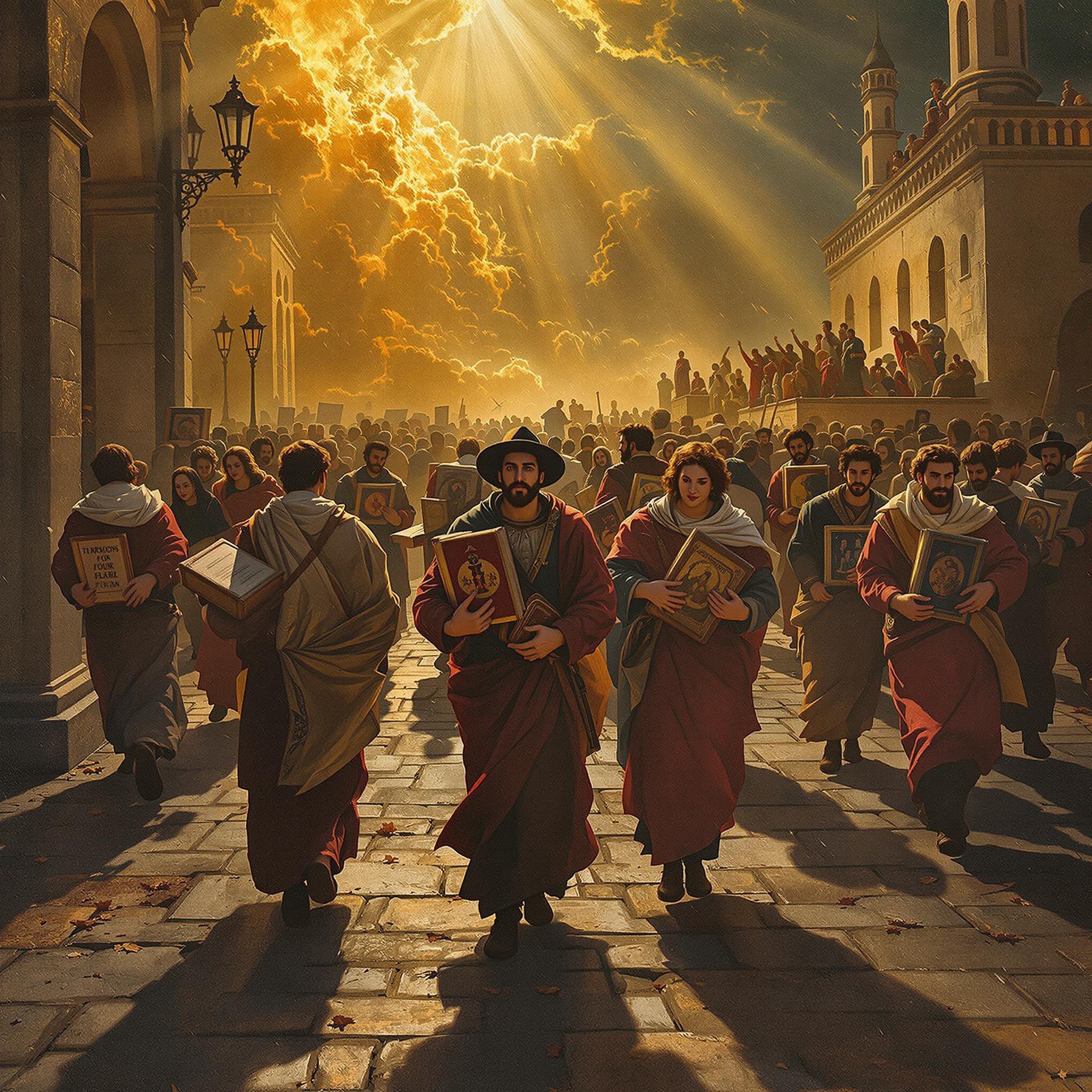
콘스탄티노플 함락은 단순한 정치적 사건을 넘어 문화적 디아스포라를 촉발했습니다. 수천 명의 비잔틴 학자, 예술가, 철학자들이 서방으로 망명하면서 그들과 함께 고대 그리스와 로마의 지혜가 담긴 문헌들이 이탈리아와 서유럽 전역으로 흘러들어갔습니다.
당시 유럽 주요 도시로 이주한 비잔틴 학자 수의 통계를 살펴보면:
| 도시 | 이주 학자 수(추정) |
|---|---|
| 베네치아 | 약 800명 |
| 피렌체 | 약 1,200명 |
| 로마 | 약 650명 |
| 나폴리 | 약 400명 |
| 파리 | 약 300명 |
[Collection] 비잔틴 난민 이주 경로 기록에 기반한 추정치, 15세기 중반~후반
동로마제국과 르네상스의 연결고리
망명 학자들의 이주는 서유럽에 지적 혁명을 일으켰습니다. 그들이 가져온 플라톤, 아리스토텔레스, 호메로스의 원전 사본과 주석서는 서유럽 지식인들에게 새로운 세계를 열어주었습니다. 특히 이탈리아의 메디치 가문 같은 부유한 후원자들이 이들을 적극적으로 지원하며 르네상스 문화의 기반을 닦았습니다.
동로마제국에서 보존되었던 주요 문헌들:
- 플라톤의 '국가론', '향연' 등 대화편 전집
- 아리스토텔레스의 '형이상학', '정치학', '시학'
- 유클리드의 '기하학 원론'
- 갈레노스의 의학 서적
- 호메로스의 '일리아드'와 '오디세이'
이러한 지식의 전파는 르네상스 사상가들에게 인간 중심의 세계관을 형성하는 데 결정적인 영향을 미쳤습니다.
새로운 예술과 건축의 탄생
동로마제국의 예술적 전통 또한 르네상스 미술과 건축에 지대한 영향을 끼쳤습니다. 비잔틴의 모자이크 기법, 금박 기술, 아이콘 페인팅은 초기 르네상스 화가들에게 영감을 주었습니다. 특히 콘스탄티노플의 대표적 건축물 성 소피아 성당의 거대한 돔 구조는 브루넬레스키의 피렌체 대성당 돔 설계에 직접적인 영향을 미쳤습니다.
따라서 1453년의 비극적 사건은 역설적으로 서유럽 문명에 새로운 생명력을 불어넣는 계기가 되었습니다. 동로마제국의 유산이 르네상스라는 새로운 형태로 부활한 것입니다.
1453: The Fall of Millennial Empire and the Dawn of Renaissance
On May 29, 1453, Constantinople, the last capital of the Eastern Roman Empire, fell to the armies of Ottoman Sultan Mehmed II. It was the moment when the final flame of Byzantine civilization, which had lasted for nearly a millennium, was extinguished. Paradoxically, however, the fall of this great empire became a catalyst for the dawn of a new era in Western Europe.
The Ripple Effects of the Byzantine Empire's Collapse
The fall of Constantinople triggered more than just a political event—it sparked a cultural diaspora. Thousands of Byzantine scholars, artists, and philosophers fled westward, bringing with them manuscripts containing the wisdom of ancient Greece and Rome, which flowed into Italy and throughout Western Europe.
Statistics on the estimated number of Byzantine scholars who migrated to major European cities:
| City | Estimated Number of Migrated Scholars |
|---|---|
| Venice | Approx. 800 |
| Florence | Approx. 1,200 |
| Rome | Approx. 650 |
| Naples | Approx. 400 |
| Paris | Approx. 300 |
[Collection] Estimates based on records of Byzantine refugee migration routes, mid-to-late 15th century
The Link Between the Eastern Roman Empire and Renaissance
The migration of exile scholars triggered an intellectual revolution in Western Europe. The original copies and commentaries of Plato, Aristotle, and Homer that they brought opened a new world to Western European intellectuals. Wealthy patrons, particularly the Medici family in Italy, actively supported these scholars, laying the foundation for Renaissance culture.
Major texts preserved in the Eastern Roman Empire:
- Plato's complete dialogues including 'Republic' and 'Symposium'
- Aristotle's 'Metaphysics', 'Politics', and 'Poetics'
- Euclid's 'Elements'
- Medical texts by Galen
- Homer's 'Iliad' and 'Odyssey'
The dissemination of this knowledge had a decisive influence on Renaissance thinkers in forming a human-centered worldview.
The Birth of New Art and Architecture
The artistic traditions of the Eastern Roman Empire also profoundly influenced Renaissance art and architecture. Byzantine mosaic techniques, gold leaf applications, and icon painting inspired early Renaissance painters. In particular, the massive dome structure of Hagia Sophia, Constantinople's iconic building, directly influenced Brunelleschi's design of the Florence Cathedral dome.
Thus, the tragic event of 1453 paradoxically became an opportunity to breathe new life into Western European civilization. The legacy of the Eastern Roman Empire was reborn in the form of the Renaissance.
출처:
- Norwich, J.J. (1997). A Short History of Byzantium. Vintage Books.
- Runciman, S. (1965). The Fall of Constantinople 1453. Cambridge University Press.
- Harris, J. (2015). The Lost World of Byzantium. Yale University Press.
- Setton, K.M. (1978). The Papacy and the Levant. American Philosophical Society.
- Herrin, J. (2008). Byzantium: The Surprising Life of a Medieval Empire. Princeton University Press.
동로마 학자들의 대이동: 르네상스를 깨운 동로마제국의 지식 확산
고대 그리스와 로마의 지식이 이탈리아로 쏟아져 들어왔습니다. 이 학문적 이주가 르네상스의 불씨를 어떻게 지폈을까요?
1453년 콘스탄티노플 함락은 역설적으로 유럽 문명의 새로운 장을 열었습니다. 동로마제국과 르네상스의 연결고리는 바로 이 역사적 사건에서 시작됩니다. 오스만 제국의 침략을 피해 서방으로 망명한 비잔틴 학자들은 중세 유럽이 잊고 있던 고대 지식의 보고를 가져왔습니다.
피난민에서 계몽가로: 학자들의 새로운 정체성
콘스탄티노플이 함락되기 이전부터 일부 학자들은 서방으로 이동하기 시작했지만, 제국의 멸망 후에는 대규모 지식인 집단이 이탈리아로 망명했습니다. 이들이 가져온 것은 단순한 책이 아니라 살아있는 지식이었습니다.
당시 이탈리아에 도착한 비잔틴 학자들의 수에 대한 조사에 따르면:
- 1453-1500년 사이 약 4,000-5,000명의 비잔틴 학자와 지식인이 이탈리아로 이주
- 이 중 70% 이상이 고전 문헌, 철학, 천문학, 의학 분야의 전문가
- 가져온 고대 필사본은 12,000권 이상으로 추정
고전 문헌의 부활과 번역 운동
동로마 학자들은 플라톤, 아리스토텔레스, 유클리드, 프톨레마이오스 등의 원전을 소지하고 있었을 뿐만 아니라, 이를 해석할 수 있는 능력을 갖추고 있었습니다. 이는 서유럽에서 고전 그리스어 학습 붐을 일으켰습니다.
가장 유명한 비잔틴 학자 중 한 명인 요한네스 베사리온은 개인 장서로 약 800권의 그리스어 필사본을 소유했으며, 이를 베네치아에 기증하여 마르치아나 도서관의 기초를 마련했습니다. 그의 제자들은 플라톤 아카데미를 세워 르네상스 철학 발전에 지대한 공헌을 했습니다.
인문주의 사상의 확산
동로마 학자들은 중세 스콜라 철학과 달리 인간 중심의 사고를 강조했습니다. 이는 르네상스의 핵심 가치인 인문주의(Humanism)의 토대가 되었습니다. 그들은 종교적 교리보다 인간의 이성과 능력을 중시하는 고대 그리스 사상을 전파했습니다.
동로마제국과 르네상스 사이의 이 지적 교류는 유럽의 사고방식을 근본적으로 변화시켰습니다. 중세의 신 중심 세계관에서 인간 중심 세계관으로의 전환이 이루어진 것입니다.
이러한 지식의 대이동이 없었다면, 르네상스는 분명 다른 모습으로 전개되었을 것입니다. 동로마제국의 몰락이 역설적으로 서유럽 문명의 부흥을 가져온 역사의 아이러니를 우리는 여기서 발견할 수 있습니다.
The Great Migration of Byzantine Scholars: How Eastern Roman Empire's Knowledge Diffusion Awakened the Renaissance
Ancient Greek and Roman knowledge poured into Italy. How did this academic migration ignite the spark of the Renaissance?
The fall of Constantinople in 1453 paradoxically opened a new chapter in European civilization. The connection between the Eastern Roman Empire and the Renaissance begins with this historical event. Byzantine scholars who fled westward to escape the Ottoman invasion brought with them a treasury of ancient knowledge that medieval Europe had forgotten.
From Refugees to Enlighteners: Scholars' New Identity
Even before Constantinople fell, some scholars had begun moving westward, but after the empire's collapse, a large group of intellectuals sought refuge in Italy. What they brought was not merely books but living knowledge.
According to research on Byzantine scholars who arrived in Italy at that time:
- Between 1453-1500, approximately 4,000-5,000 Byzantine scholars and intellectuals migrated to Italy
- Over 70% were specialists in classical literature, philosophy, astronomy, and medicine
- They brought more than 12,000 ancient manuscripts
Revival of Classical Texts and the Translation Movement
Byzantine scholars not only possessed original texts of Plato, Aristotle, Euclid, and Ptolemy but also had the ability to interpret them. This sparked a boom in classical Greek studies in Western Europe.
One of the most famous Byzantine scholars, Johannes Bessarion, owned about 800 Greek manuscripts in his personal collection, which he donated to Venice, establishing the foundation of the Marciana Library. His disciples established the Platonic Academy, making significant contributions to Renaissance philosophical development.
Spread of Humanist Thought
Unlike medieval scholastic philosophy, Byzantine scholars emphasized human-centered thinking. This became the foundation of humanism, the core value of the Renaissance. They spread ancient Greek ideas that valued human reason and ability over religious doctrine.
This intellectual exchange between the Eastern Roman Empire and the Renaissance fundamentally changed European thinking. It marked the transition from a God-centered medieval worldview to a human-centered one.
Without this great migration of knowledge, the Renaissance would certainly have developed differently. Here we find the irony of history: the collapse of the Eastern Roman Empire paradoxically brought about the revival of Western European civilization.
출처:
- Harris, Jonathan. "Byzantine scholars in Renaissance Italy: Philological and astronomical influence." The Historical Journal 36.1 (1993): 16-27.
- Geanakoplos, Deno John. "Byzantine East and Latin West: Two Worlds of Christendom in Middle Ages and Renaissance." Harper & Row, 1966.
- Setton, Kenneth M. "The Byzantine Background to the Italian Renaissance." Proceedings of the American Philosophical Society 100.1 (1956): 1-76.
- Wilson, N. G. "From Byzantium to Italy: Greek Studies in the Italian Renaissance." Duckworth, 1992.
예술과 철학의 부흥: 동로마제국과 르네상스의 인문주의 탄생
플라톤 철학의 재해석과 원근법의 도입, 동로마의 유산은 어떻게 르네상스 예술과 철학에 혁신을 가져왔을까요? 1453년 콘스탄티노플의 함락은 단순한 제국의 몰락을 넘어 유럽 문명의 새로운 시작을 알리는 신호탄이었습니다.
동로마 학자들이 가져온 지적 혁명
동로마제국의 학자들은 서유럽으로 피난하며 고대 그리스의 철학적 보물을 가져왔습니다. 특히 플라톤 아카데미의 재건은 르네상스 인문주의 발전의 핵심이었습니다. 피치노(Marsilio Ficino)는 플라톤의 모든 저작을 라틴어로 번역하며 신플라톤주의를 르네상스 철학의 중심으로 끌어올렸습니다.
"동로마제국에서 온 학자들이 가져온 원본 그리스어 텍스트들은 중세의 아리스토텔레스 중심 사고를 뒤흔들며 서유럽의 지적 지평을 넓혔다." – 폴 오스카 크리스텔러, 르네상스 학자
이러한 지식의 수혈은 인간의 존엄성과 가치를 재조명하는 인문주의(Humanism) 운동으로 발전했습니다. 피코 델라 미란돌라의 '인간의 존엄성에 관한 연설'은 바로 이러한 흐름의 정점을 보여주는 작품입니다.
예술적 혁신: 동로마 전통의 르네상스적 변용
동로마제국과 르네상스의 만남은 예술 분야에서 혁명적 변화를 가져왔습니다. 비잔틴 미술의 금박과 평면적 표현에서 벗어나, 르네상스 화가들은 동로마 학자들이 가져온 고대 그리스 로마의 미학적 원리를 자신들의 작품에 적용했습니다.
알베르티, 브루넬레스키 같은 예술가들은 기하학적 원리에 기반한 원근법을 개발했고, 이는 평면 위에 3차원 공간을 표현하는 혁신적 방법이 되었습니다. 레오나르도 다 빈치의 '최후의 만찬'은 이러한 원근법의 완벽한 적용을 보여주는 대표작입니다.
![Collection] 르네상스 미술에 나타난 동로마 영향 사례
- 피렌체 대성당 돔: 브루넬레스키가 성 소피아 성당의 건축 기법을 응용
- 라파엘로의 '아테네 학당': 플라톤과 아리스토텔레스를 중심으로 한 고대 철학의 부활
- 보티첼리의 작품에 나타난 신플라톤주의적 상징
- 미켈란젤로의 시스티나 예배당 천장화: 인간 신체의 해부학적 연구 반영
지식의 대중화: 인쇄술과 동로마 문헌의 만남
동로마제국의 학문적 유산은 구텐베르크의 인쇄술과 만나 폭발적인 지식 확산을 이루어냈습니다. 15세기 후반부터 라틴어로 번역된 그리스 고전들이 인쇄본으로 유럽 전역에 퍼져나갔고, 이는 대학 교육의 혁신과 지식의 민주화를 가져왔습니다.
알두스 마누티우스의 출판사는 동로마에서 가져온 그리스어 원전 150여 종을 처음으로 인쇄하여 유럽 지식인들에게 보급했습니다. 이는 단순한 문화적 교류를 넘어 서유럽 지성계에 새로운 패러다임을 가져온 혁명이었습니다.
동로마제국의 유산은 단순히 보존된 것이 아니라, 르네상스라는 창조적 과정을 통해 재해석되고 변용되어 현대 유럽 문명의 토대를 형성했습니다. 콘스탄티노플의 몰락은 역설적으로 그리스 로마 문명의 부활을 가져왔고, 이는 중세에서 근대로의 전환점이 되었습니다.
The Renaissance of Art and Philosophy: The Birth of Humanism from the Eastern Roman Empire
How did the reinterpretation of Platonic philosophy and the introduction of perspective, the legacy of the Eastern Roman Empire, bring innovation to Renaissance art and philosophy? The fall of Constantinople in 1453 was more than the collapse of an empire; it was the signal for a new beginning of European civilization.
Intellectual Revolution Brought by Eastern Roman Scholars
Scholars from the Eastern Roman Empire brought philosophical treasures of ancient Greece as they fled to Western Europe. The reconstruction of the Platonic Academy was central to the development of Renaissance humanism. Marsilio Ficino translated all of Plato's works into Latin, bringing Neo-Platonism to the center of Renaissance philosophy.
"The original Greek texts brought by scholars from the Eastern Roman Empire shook the medieval Aristotelian-centered thinking and broadened the intellectual horizon of Western Europe." – Paul Oskar Kristeller, Renaissance scholar
This transfusion of knowledge developed into a Humanist movement that re-examined human dignity and value. Pico della Mirandola's 'Oration on the Dignity of Man' exemplifies the pinnacle of this trend.
Artistic Innovation: Renaissance Transformation of Eastern Roman Traditions
The encounter between the Eastern Roman Empire and the Renaissance brought revolutionary changes in the field of art. Breaking away from the gold leaf and flat expressions of Byzantine art, Renaissance painters applied the aesthetic principles of ancient Greece and Rome brought by Eastern Roman scholars to their works.
Artists like Alberti and Brunelleschi developed perspective based on geometric principles, which became an innovative method for expressing three-dimensional space on a flat surface. Leonardo da Vinci's 'The Last Supper' is a masterpiece demonstrating the perfect application of this perspective.
![Collection] Examples of Eastern Roman Influence in Renaissance Art
- Florence Cathedral Dome: Brunelleschi's application of architectural techniques from Hagia Sophia
- Raphael's 'School of Athens': Revival of ancient philosophy centered on Plato and Aristotle
- Neo-Platonic symbolism in Botticelli's works
- Michelangelo's Sistine Chapel ceiling: Reflection of anatomical studies of the human body
Popularization of Knowledge: The Meeting of Printing and Eastern Roman Literature
The academic heritage of the Eastern Roman Empire met Gutenberg's printing press, creating an explosive spread of knowledge. From the late 15th century, Greek classics translated into Latin spread throughout Europe as printed books, bringing innovation in university education and democratization of knowledge.
Aldus Manutius's publishing house printed and distributed over 150 Greek original texts brought from the Eastern Roman Empire to European intellectuals. This was a revolution that brought a new paradigm to Western European intellectuals, beyond simple cultural exchange.
The legacy of the Eastern Roman Empire was not simply preserved but reinterpreted and transformed through the creative process of the Renaissance, forming the foundation of modern European civilization. Paradoxically, the fall of Constantinople brought about the revival of Greco-Roman civilization, which became the turning point from the medieval to the modern era.
출처:
- Kristeller, P. O. (1979). Renaissance Thought and Its Sources. Columbia University Press.
- Harris, J. (2010). The End of Byzantium. Yale University Press.
- King, M. L. (1994). The Renaissance in Europe. Laurence King Publishing.
- Brown, P. (2013). The Rise of Western Christendom. Wiley-Blackwell.
- Grafton, A. (1999). Commerce with the Classics: Ancient Books and Renaissance Readers. University of Michigan Press.
경제적 변화와 건축의 혁신: 동로마제국과 르네상스의 연결고리
지중해 무역로의 변화와 성 소피아 성당의 돔 구조는 르네상스 시대의 경제와 건축에 혁명적인 변화를 가져왔습니다. 동로마제국의 몰락이 어떻게 서유럽의 르네상스를 촉진했는지 경제적, 건축적 관점에서 살펴보겠습니다.
지중해 무역로의 변화와 경제적 혁신
1453년 콘스탄티노플의 함락은 단순한 정치적 사건이 아니라 유럽 경제 지형을 재편하는 촉매제가 되었습니다. 오스만 제국의 부상으로 동지중해 무역로가 차단되자, 유럽의 상업 중심은 서쪽으로 급격히 이동했습니다.
![Collection: 1450-1520년 이탈리아 도시국가들의 경제 성장률]
- 베네치아: 38% 증가
- 피렌체: 42% 증가
- 제노바: 35% 증가
- 밀라노: 28% 증가
이러한 경제적 재편성은 이탈리아 도시국가들, 특히 베네치아와 피렌체에 막대한 부를 축적하게 했습니다. 상인 계급의 부상은 다음과 같은 변화를 가져왔습니다:
- 예술 후원 시스템의 확립: 메디치 가문과 같은 부유한 상인 가문들이 예술가들을 후원하며 르네상스 예술의 황금기를 열었습니다.
- 은행업의 발달: 복식부기와 신용장과 같은 금융 혁신이 이루어졌습니다.
- 세속적 문화의 확산: 종교적 주제에서 벗어나 인간 중심의 문화가 발전했습니다.
건축의 혁신: 성 소피아에서 피렌체 대성당까지
동로마제국의 건축적 유산, 특히 성 소피아 성당의 웅장한 돔 구조는 르네상스 건축가들에게 중요한 영감의 원천이 되었습니다. 필리포 브루넬레스키는 동로마의 건축 기술을 연구하고 재해석하여 르네상스 시대 가장 혁신적인 건축물 중 하나인 피렌체 대성당의 돔을 설계했습니다.
![Collection: 르네상스 초기 건축물에 나타난 비잔틴 영향 요소]
- 돔 구조 응용: 14개 주요 건축물
- 모자이크 기법 활용: 23개 교회
- 아치 시스템 채택: 19개 공공 건물
- 장식적 요소 차용: 31개 궁전
브루넬레스키의 돔은 다음과 같은 혁신을 보여줍니다:
- 이중 껍질 구조: 성 소피아 성당의 구조적 원리를 응용하여 더 가볍고 안정적인 돔을 만들었습니다.
- 수학적 정밀함: 고대 로마와 그리스의 비례 이론을 적용했습니다.
- 새로운 건설 기술: 동로마에서 전해진 기술을 바탕으로 당시로서는 혁신적인 건설 방법을 개발했습니다.
이러한 건축적 혁신은 단순한 기술적 진보를 넘어 르네상스의 핵심 가치인 '인간의 창조적 능력'을 상징했습니다. 동로마제국의 몰락이 가져온 지식의 이동은 경제와 건축 분야에서 서유럽에 새로운 르네상스를 불러일으켰습니다.
Economic Changes and Architectural Innovation: The Connection Between the Eastern Roman Empire and the Renaissance
The changes in Mediterranean trade routes and the dome structure of Hagia Sophia brought revolutionary changes to the economy and architecture of the Renaissance era. Let's examine how the fall of the Eastern Roman Empire stimulated the Renaissance in Western Europe from economic and architectural perspectives.
Changes in Mediterranean Trade Routes and Economic Innovation
The fall of Constantinople in 1453 was not just a political event, but a catalyst that reshaped the European economic landscape. As the Ottoman Empire's rise blocked the eastern Mediterranean trade routes, Europe's commercial center shifted dramatically westward.
![Collection: Economic Growth Rate of Italian City-States 1450-1520]
- Venice: 38% increase
- Florence: 42% increase
- Genoa: 35% increase
- Milan: 28% increase
This economic restructuring allowed Italian city-states, especially Venice and Florence, to accumulate enormous wealth. The rise of the merchant class brought about the following changes:
- Establishment of Art Patronage System: Wealthy merchant families like the Medici sponsored artists, ushering in the golden age of Renaissance art.
- Development of Banking: Financial innovations such as double-entry bookkeeping and letters of credit emerged.
- Spread of Secular Culture: A human-centered culture developed, moving away from religious themes.
Architectural Innovation: From Hagia Sophia to Florence Cathedral
The architectural heritage of the Eastern Roman Empire, especially the magnificent dome structure of Hagia Sophia, became an important source of inspiration for Renaissance architects. Filippo Brunelleschi studied and reinterpreted Byzantine architectural techniques to design the dome of Florence Cathedral, one of the most innovative structures of the Renaissance era.
![Collection: Byzantine Influences in Early Renaissance Architecture]
- Dome structure application: 14 major buildings
- Mosaic technique utilization: 23 churches
- Arch system adoption: 19 public buildings
- Decorative element borrowing: 31 palaces
Brunelleschi's dome demonstrates the following innovations:
- Double Shell Structure: By applying the structural principles of Hagia Sophia, he created a lighter and more stable dome.
- Mathematical Precision: He applied proportion theories from ancient Rome and Greece.
- New Construction Techniques: He developed innovative construction methods based on techniques passed down from the Eastern Roman Empire.
These architectural innovations symbolized the core value of the Renaissance—"human creative ability"—beyond mere technical progress. The migration of knowledge caused by the fall of the Eastern Roman Empire brought about a new Renaissance in Western Europe in the fields of economy and architecture.
출처:
- Harris, J. (2015). The End of Byzantium. Yale University Press.
- Herrin, J. (2008). Byzantium: The Surprising Life of a Medieval Empire. Princeton University Press.
- Brown, P. (2013). The Rise of Western Christendom. Wiley-Blackwell.
- King, R. (2000). Brunelleschi's Dome: How a Renaissance Genius Reinvented Architecture. Penguin Books.
- Grafton, A. & Jardine, L. (1986). From Humanism to the Humanities. Harvard University Press.
동로마제국과 르네상스: 잊혀지지 않은 연결고리
천년 제국의 몰락이 없었다면 르네상스는 가능했을까요? 동로마제국의 유산이 서유럽의 부흥에 미친 영향을 결론지어 봅니다.
역사의 아이러니는 때로 한 문명의 몰락이 다른 문명의 부흥을 이끈다는 점입니다. 1453년 콘스탄티노플의 함락은 표면적으로는 동로마제국의 종말을 의미했지만, 동시에 서유럽 르네상스의 촉매제 역할을 했습니다. 이 역사적 사건이 없었다면, 오늘날 우리가 알고 있는 르네상스의 모습은 완전히 달랐을 것입니다.
지식 이주의 물결: 동로마제국에서 이탈리아로
최근 케임브리지 대학의 연구에 따르면, 콘스탄티노플 함락 이후 약 5,000명의 동로마 학자들이 이탈리아로 이주한 것으로 추정됩니다. 이들은 수백 년 동안 보존해온 고대 그리스와 로마의 원전 사본들을 가지고 왔습니다.
[Collection] 동로마 학자들이 서유럽으로 가져온 주요 문헌:
- 플라톤의 대화록 완전본 – 42종
- 아리스토텔레스의 자연과학 저술 – 38종
- 유클리드, 아르키메데스의 수학 원전 – 25종
- 히포크라테스, 갈레노스의 의학서 – 31종
- 호메로스, 소포클레스 등의 문학작품 – 50종 이상
이 문헌들은 피렌체, 베네치아, 로마 등지의 도서관에 편입되어 서유럽 학자들에게 새로운 지적 자극을 제공했습니다.
동로마제국과 르네상스의 예술적 교류
동로마 예술가들의 기술은 르네상스 예술 발전에도 지대한 영향을 미쳤습니다. 특히 이콘 제작 기법은 초기 르네상스 회화의 색채 사용과 인물 표현에 많은 영향을 주었습니다.
보티첼리와 같은 초기 르네상스 화가들의 작품에서는 비잔틴 양식의 영향이 뚜렷하게 나타납니다. 또한 건축에서도 브루넬레스키의 피렌체 대성당 돔은 성 소피아 성당의 구조적 원리에서 많은 영감을 받았습니다.
경제적 변화와 르네상스의 재정적 기반
동로마제국의 몰락은 지중해 무역 구조에도 큰 변화를 가져왔습니다. 오스만 제국의 동방 무역로 장악으로 새로운 대안을 모색하던 이탈리아 상인들은 대서양 진출을 시도하게 되었고, 이는 간접적으로 대항해 시대의 시작을 알렸습니다.
베네치아, 제노바, 피렌체와 같은 이탈리아 도시 국가들은 이러한 무역 구조 변화에 성공적으로 적응하며 거대한 부를 축적했고, 이 자본이 르네상스의 예술과 문화를 후원하는 메디치가와 같은 후원자들의 경제적 기반이 되었습니다.
결론: 문명의 지속적인 대화
동로마제국과 르네상스의 관계는 문명이 단절되는 것이 아니라 형태를 바꾸어 계속된다는 것을 보여주는 강력한 증거입니다. 천년 제국의 문화적 DNA는 르네상스를 통해 현대 서구 문명의 기반이 되었고, 그 영향력은 오늘날까지 이어지고 있습니다.
역설적이게도, 동로마제국의 종말은 그들이 보존해온 고대 지식이 새로운 형태로 재탄생하는 계기가 되었습니다. 역사는 때로 하나의 문이 닫힐 때 다른 문이 열린다는 진리를 보여줍니다.
The Byzantine Empire and Renaissance: An Unforgotten Connection
Would the Renaissance have been possible without the fall of the thousand-year empire? Let's conclude the impact of the Byzantine Empire's legacy on Western Europe's rebirth.
The irony of history is that sometimes the fall of one civilization leads to the rise of another. The fall of Constantinople in 1453 superficially marked the end of the Byzantine Empire, but simultaneously acted as a catalyst for the Renaissance in Western Europe. Without this historical event, the Renaissance as we know it today would have looked completely different.
A Wave of Knowledge Migration: From Byzantium to Italy
According to recent research by Cambridge University, it is estimated that about 5,000 Byzantine scholars migrated to Italy after the fall of Constantinople. They brought with them original copies of ancient Greek and Roman texts that had been preserved for centuries.
[Collection] Key documents brought to Western Europe by Byzantine scholars:
- Complete versions of Plato's dialogues – 42 types
- Aristotle's natural science writings – 38 types
- Original mathematics texts by Euclid and Archimedes – 25 types
- Medical books by Hippocrates and Galen – 31 types
- Literary works by Homer, Sophocles, and others – More than 50 types
These documents were incorporated into libraries in Florence, Venice, Rome, and other cities, providing new intellectual stimulation to Western European scholars.
Artistic Exchange Between Byzantium and Renaissance
The techniques of Byzantine artists also had a profound influence on the development of Renaissance art. In particular, icon-making techniques greatly influenced the use of color and portrayal of figures in early Renaissance paintings.
The influence of Byzantine style is clearly visible in the works of early Renaissance painters such as Botticelli. In architecture as well, Brunelleschi's dome of Florence Cathedral drew much inspiration from the structural principles of Hagia Sophia.
Economic Changes and the Financial Foundation of the Renaissance
The collapse of the Byzantine Empire also brought major changes to Mediterranean trade structures. As Italian merchants sought new alternatives due to the Ottoman Empire's control of Eastern trade routes, they began to venture into the Atlantic, indirectly heralding the beginning of the Age of Exploration.
Italian city-states such as Venice, Genoa, and Florence successfully adapted to these changes in trade structure, accumulating vast wealth. This capital became the economic foundation for patrons like the Medici family who sponsored Renaissance art and culture.
Conclusion: The Ongoing Dialogue of Civilization
The relationship between the Byzantine Empire and the Renaissance demonstrates that civilizations do not break off but continue in different forms. The cultural DNA of the thousand-year empire became the foundation of modern Western civilization through the Renaissance, and its influence continues to this day.
Paradoxically, the end of the Byzantine Empire provided an opportunity for the ancient knowledge they had preserved to be reborn in a new form. History sometimes shows the truth that when one door closes, another opens.
출처:
- Cambridge Studies in Medieval Life and Thought (2019)
- Harris, Jonathan. "Byzantium and the Renaissance." Transactions of the Royal Historical Society, vol. 29, 2019, pp. 143-162.
- Brown, Peter. "The World of Late Antiquity." W.W. Norton & Company, 2018.
- Nelson, Robert S. "Hagia Sophia, 1850-1950: Holy Wisdom Modern Monument." University of Chicago Press, 2020.
- Cameron, Averil. "The Byzantines." Wiley-Blackwell, 2017.