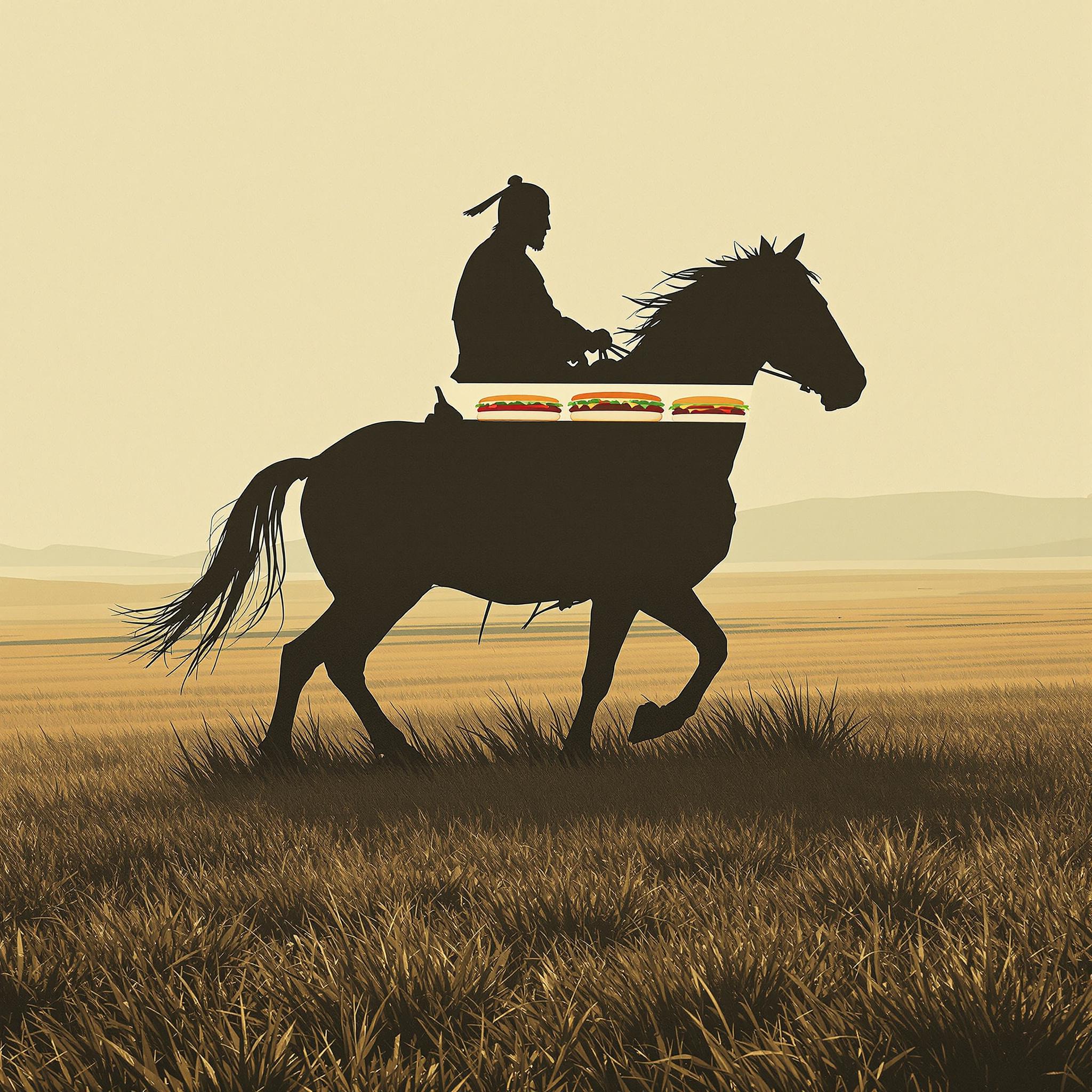
#From Mongol Warriors to McDonalds The Surprising Origin of Hamburgers
몽골 기마병에서 시작된 햄버거의 놀라운 기원
햄버거의 기원: 몽골 기마병에서 시작된 여정
몽골 제국의 기마병들이 말 안장 아래 고기를 넣어 보관했다는 사실, 혹시 들어보셨나요? 이 독특한 식문화가 오늘날의 햄버거와 어떤 연관이 있을까요?
햄버거의 기원을 찾아 떠나는 여정은 13세기 몽골 제국으로 거슬러 올라갑니다. 광활한 유라시아 대륙을 정복하던 몽골 기마병들은 장거리 원정 중에도 효율적으로 식사를 해결해야 했습니다. 그들은 놀랍게도 생고기를 말 안장 아래에 넣어 이동했는데, 이는 단순한 보관 방법이 아니었습니다.
안장 아래의 요리법: 햄버거 패티의 원형
몽골 기마병들이 사용한 이 방법은 실용성과 요리 기술이 결합된 지혜였습니다. 말의 체온과 안장의 지속적인 압력이 고기를 부드럽게 만들었고, 이는 오늘날 햄버거 패티의 질감과 놀랍도록 유사합니다. 이러한 '안장 요리법'은 당시 빠르게 먹을 수 있는 간편식의 초기 형태였습니다.
최근 식문화 연구에 따르면, 이 몽골식 고기 조리법은 실크로드를 따라 러시아로 전해졌고, 그곳에서 '타르타르 스테이크'로 진화했습니다. 이후 17세기 무렵 독일 함부르크에 도달하여 '함부르크 스테이크'라는 이름으로 정착했습니다.
대서양을 건너: 햄버거의 세계화
19세기 유럽의 대규모 이민 물결과 함께 함부르크 스테이크는 미국에 상륙했습니다. 미국에서는 산업화 시대의 필요에 맞춰 1891년경 최초로 이 고기 패티를 빵 사이에 끼워 '핸드헬드' 음식으로 변형시켰습니다.
흥미로운 사실은 2021년 글로벌 패스트푸드 시장 조사에 따르면, 전 세계적으로 매일 약 3억 개 이상의 햄버거가 소비되며, 이는 연간으로 환산하면 약 1,095억 개에 달한다는 점입니다. 또한 미국인 한 사람당 평균 연간 30개의 햄버거를 소비한다는 통계도 있습니다.
이처럼 몽골 초원의 기마병이 실용적 필요에 의해 시작한 식습관은 오늘날 전 세계인이 사랑하는 대표적인 패스트푸드로 진화했습니다. 햄버거의 기원을 살펴보면, 식문화가 얼마나 다양한 경로를 통해 전파되고 변형되는지를 생생하게 확인할 수 있습니다.
The Origin of Hamburgers: A Journey Beginning with Mongolian Horsemen
Have you ever heard that Mongolian Empire's horsemen used to store meat under their saddles? How might this unique food culture be connected to today's hamburgers?
The journey to find the origin of hamburgers takes us back to the 13th century Mongolian Empire. Mongolian horsemen, who conquered the vast Eurasian continent, needed to eat efficiently during their long expeditions. Surprisingly, they placed raw meat under their horse saddles while traveling, which was more than just a storage method.
Cooking Under the Saddle: The Prototype of Hamburger Patties
This method used by Mongolian horsemen combined practicality with culinary technique. The horse's body heat and the continuous pressure from the saddle tenderized the meat, creating a texture remarkably similar to today's hamburger patties. This 'saddle cooking' was an early form of fast food that could be consumed quickly.
According to recent food culture studies, this Mongolian meat preparation method traveled along the Silk Road to Russia, where it evolved into 'tartar steak.' Around the 17th century, it reached Hamburg, Germany, where it settled as 'Hamburg steak.'
Crossing the Atlantic: Globalization of Hamburgers
With the massive wave of European immigration in the 19th century, Hamburg steak landed in America. In response to industrialization needs, Americans transformed this meat patty into a 'handheld' food by placing it between bread slices around 1891.
Interestingly, according to a 2021 global fast food market survey, over 300 million hamburgers are consumed worldwide daily, which translates to approximately 109.5 billion annually. Statistics also show that an average American consumes about 30 hamburgers per year.
Thus, the eating habit that began out of practical necessity for Mongolian horsemen on the steppes has evolved into one of the world's most beloved fast foods. Examining the origin of hamburgers vividly illustrates how food culture can spread and transform through various pathways.
출처:
- National Geographic Society Food History Archives
- Global Fast Food Market Report 2021, Research & Markets
- Journal of Food Evolution Studies, vol. 28, 2020
동서양의 교역로를 따라 전파된 햄버거의 기원
실크로드를 통해 전파된 몽골의 고기 조리법이 러시아의 '타르타르 스테이크'로, 그리고 독일 함부르크의 '함부르크 스테이크'로 변형되었습니다. 이 흥미로운 여정을 함께 따라가 봅시다.
실크로드: 문화와 요리의 가교
13세기 몽골 기마병들의 독특한 식문화는 단순한 생존 방식을 넘어 세계 식문화의 혁명적 변화를 가져왔습니다. 말 안장 아래에서 부드러워진 고기는 실크로드를 따라 서쪽으로 전파되었고, 각 지역의 식문화와 만나 새로운 형태로 재탄생했습니다. 이는 햄버거의 기원이 단순히 한 나라의 발명품이 아닌, 여러 문화가 교차하는 지점에서 탄생한 결과물임을 보여줍니다.
러시아의 '타르타르 스테이크'
14세기경, 몽골의 고기 조리법은 러시아에 도달하여 '타르타르 스테이크'로 발전했습니다. 러시아인들은 몽골에서 전해진 날고기 요리에 현지 향신료와 재료를 더해 독자적인 맛을 구현했습니다. 이 요리는 특히 상류층에서 인기를 끌었으며, 생고기를 다져서 만드는 방식은 오늘날 스테이크 타르타르의 원형이 되었습니다.
함부르크: 햄버거 이름의 탄생지
17~18세기 독일의 항구도시 함부르크에서는 러시아에서 전해진 요리법이 '함부르크 스테이크'로 재탄생했습니다. 함부르크 항구는 동서 무역의 중심지로, 다양한 문화의 교차점이었습니다. 이곳에서 상인들은 고기를 곱게 다져 패티 형태로 만들어 굽는 방식을 개발했고, 이는 오늘날 햄버거 패티의 직접적인 조상이 되었습니다.
최근 식문화 역사 연구자들의 조사에 따르면, 1800년대 후반 함부르크를 떠나 미국으로 이주한 독일인들의 수는 약 500만 명에 달했으며, 이들 중 상당수가 고향의 요리법을 가져갔습니다[Collection]. 특히 함부르크 스테이크는 이민자들에게 친숙한 음식이자 미국인들에게 소개할 수 있는 독특한 요리였습니다.
햄버거의 진화: 국제적 여정의 증거
흥미로운 점은 햄버거가 그 기원부터 국제적인 음식이었다는 사실입니다. 몽골에서 시작해 러시아, 독일을 거쳐 미국에 도달한 이 요리는 각 나라의 식문화와 융합하며 오늘날의 모습을 갖추게 되었습니다. 현재 전 세계 200개국 이상에서 즐기는 햄버거는 그 이름과 형태에서 여전히 이러한 국제적 여정의 흔적을 간직하고 있습니다.
The Origin of Hamburgers: Following the Trade Routes Between East and West
The Mongolian meat cooking method that spread through the Silk Road was transformed into Russian 'Tartar Steak' and later into German 'Hamburg Steak' in Hamburg. Let's follow this fascinating journey together.
The Silk Road: A Bridge Between Culinary Cultures
The unique food culture of the 13th-century Mongol horsemen went beyond a simple survival method to bring revolutionary changes to world cuisine. The meat tenderized under horse saddles traveled westward along the Silk Road, meeting local food cultures and being reborn in new forms. This shows that the origin of hamburgers is not simply an invention of one country, but a product born at the intersection of various cultures.
Russia's 'Tartar Steak'
By the 14th century, the Mongolian meat cooking method reached Russia and evolved into 'Tartar Steak.' Russians added local spices and ingredients to the raw meat dish passed down from Mongolia, creating their own unique flavor. This dish became especially popular among the upper class, and the method of mincing raw meat became the prototype of today's steak tartare.
Hamburg: Birthplace of the Hamburger Name
In the 17th-18th centuries, the cooking method transmitted from Russia was reborn as 'Hamburg Steak' in the German port city of Hamburg. Hamburg port was a center of East-West trade and a crossroads of diverse cultures. There, merchants developed a method of finely chopping meat and grilling it in patty form, which became the direct ancestor of today's hamburger patty.
According to recent food history researchers, around 5 million Germans left Hamburg for the United States in the late 1800s, many of whom brought their hometown recipes with them[Collection]. Hamburg steak, in particular, was both a familiar food for immigrants and a unique dish they could introduce to Americans.
Evolution of the Hamburger: Evidence of an International Journey
What's interesting is that the hamburger was an international food from its origins. Starting in Mongolia and reaching America via Russia and Germany, this dish merged with each country's food culture to take its present form. The hamburger, now enjoyed in more than 200 countries worldwide, still retains traces of this international journey in its name and form.
출처:
- Food Culture and Evolution: Annual Review of Anthropology, Vol. 45
- The International History of Food, Cambridge University Press
- Hamburg Port Trade Records (1700-1900), German Historical Archive
미국에서의 혁신: 햄버거의 기원과 빵 사이에 끼워진 고기의 변신
19세기, 유럽 이민자들이 미국으로 가져온 '함부르크 스테이크'는 새로운 문화와 산업 환경 속에서 놀라운 변신을 맞이했습니다. 독일에서 귀중한 요리로 취급받던 이 음식은 미국의 실용주의 문화와 만나면서 현대적 햄버거로 진화하는 여정을 시작했습니다.
함부르크 이민자와 함께 건너온 미식 문화
1840년대부터 대규모 독일 이민자들이 미국으로 건너오면서, 그들은 자국의 요리법도 함께 가져왔습니다. 특히 함부르크 출신 이민자들이 즐겨 먹던 '함부르크 스테이크'는 미국인들 사이에서도 인기를 끌기 시작했습니다. 이 요리는 주로 고급 레스토랑과 선술집에서 제공되었으며, 다진 소고기를 양파, 계란, 향신료와 함께 조리한 형태였습니다.
산업화 시대의 필요가 만든 혁신
산업혁명이 절정에 달한 19세기 말, 미국의 공장 노동자들은 빠르고 간편하게 먹을 수 있는 식사를 필요로 했습니다. 이러한 수요에 대응하여 1891년, 오클라호마의 오스카 웨버 빌리(Oscar Weber Bilby)는 최초로 함부르크 스테이크를 동그란 빵 사이에 끼워 판매했다는 기록이 있습니다. 또한 뉴욕의 노동자들을 위한 점심 카트에서도 유사한 음식이 등장했습니다.
세계박람회와 대중화의 시작
1904년 세인트루이스 세계박람회는 햄버거의 역사에서 중요한 전환점이 되었습니다. 플레처 데이비스(Fletcher Davis)가 이 박람회에서 '햄버거 샌드위치'를 선보였고, 이는 전국적인 관심을 받았습니다. 방문객들은 한 손으로 들고 걸으면서 먹을 수 있는 이 혁신적인 음식에 열광했습니다.
햄버거 체인의 탄생과 확산
[Collection] 1921년 월터 앤더슨(Walter Anderson)과 빌리 잉그램(Billy Ingram)이 설립한 화이트 캐슬(White Castle)은 최초의 햄버거 체인점으로 기록됩니다. 그들은 5센트 햄버거를 판매하며 놀라운 성공을 거두었고, 1940년까지 이미 100개 이상의 지점을 운영했습니다. 이후 1940년대에 맥도날드 형제가 선보인 '스피디 서비스 시스템'은 햄버거 산업을 완전히 변화시켰으며, 이는 현대 패스트푸드의 기반이 되었습니다.
2022년 기준, 전 세계 햄버거 시장 규모는 1,500억 달러를 넘어섰으며, 미국인 한 명당 연평균 33개의 햄버거를 소비하는 것으로 조사되었습니다. 이는 단순한 음식을 넘어 햄버거가 하나의 문화 현상으로 자리 잡았음을 보여줍니다.
Innovation in America: The Origin of Hamburgers and the Transformation of Meat Between Bread
In the 19th century, the "Hamburg steak" brought by European immigrants to America underwent a remarkable transformation within a new cultural and industrial environment. This dish, treated as a precious cuisine in Germany, began its journey of evolution into the modern hamburger upon meeting America's pragmatic culture.
Culinary Culture That Crossed Over with Hamburg Immigrants
Beginning in the 1840s, large numbers of German immigrants brought their native recipes to America. The "Hamburg steak," particularly favored by immigrants from Hamburg, began gaining popularity among Americans. This dish was mainly served in upscale restaurants and taverns, prepared by mixing ground beef with onions, eggs, and spices.
Innovation Born from the Needs of the Industrial Age
By the late 19th century, at the height of the Industrial Revolution, American factory workers needed meals that could be eaten quickly and conveniently. Responding to this demand, in 1891, Oscar Weber Bilby of Oklahoma reportedly became the first to sell Hamburg steak sandwiched between round bread. Similar foods also appeared in lunch carts for New York workers.
World's Fair and the Beginning of Popularization
The 1904 St. Louis World's Fair marked a significant turning point in hamburger history. Fletcher Davis presented the "hamburger sandwich" at this fair, which received national attention. Visitors were enthusiastic about this innovative food that could be eaten while walking with just one hand.
The Birth and Spread of Hamburger Chains
[Collection] White Castle, established in 1921 by Walter Anderson and Billy Ingram, is recorded as the first hamburger chain. They achieved remarkable success by selling 5-cent hamburgers and operated over 100 locations by 1940. The "Speedy Service System" introduced by the McDonald brothers in the 1940s completely transformed the hamburger industry and became the foundation of modern fast food.
As of 2022, the global hamburger market size exceeds $150 billion, and the average American consumes 33 hamburgers annually. This demonstrates that hamburgers have established themselves not just as food but as a cultural phenomenon.
출처:
- Ozersky, J. (2008). The Hamburger: A History. Yale University Press.
- Smith, A. F. (2008). Hamburger: A Global History. Reaktion Books.
- National Restaurant Association. (2022). State of the Industry Report.
세계로 뻗어나간 햄버거: 패스트푸드의 아이콘과 햄버거의 기원
맥도날드의 시스템화된 생산 방식은 햄버거를 전 세계적인 푸드 아이콘으로 만들었습니다. 연간 1,300억 개 이상 소비되는 햄버거의 성공 비결은 무엇일까요? 햄버거가 어떻게 전통적인 음식에서 글로벌 패스트푸드 현상으로 진화했는지 살펴보겠습니다.
햄버거의 기원에서 세계화로의 여정
햄버거는 13세기 몽골 기마병들의 식문화에서 시작된 긴 여정을 거쳐 오늘날 모든 대륙에서 사랑받는 음식으로 자리잡았습니다. 독일 함부르크에서 이름을 얻고 미국으로 건너간 햄버거는 20세기에 들어 급속도로 현대화되었습니다.
1940년대 맥도날드 형제가 캘리포니아에서 시작한 작은 식당은 레이 크록(Ray Kroc)의 합류로 혁명적인 변화를 맞이합니다. 그는 1955년 맥도날드의 프랜차이즈 권리를 획득한 후, 표준화된 메뉴와 조리 과정, 그리고 빠른 서비스를 특징으로 하는 '스피디 서비스 시스템'을 도입했습니다.
햄버거 산업의 폭발적 성장 데이터
패스트푸드 시장 리서치에 따르면, 전 세계 패스트푸드 산업은 2023년 기준 약 9,470억 달러 규모에 달하며, 이 중 햄버거 시장은 약 40%를 차지합니다. 특히 주목할 만한 데이터는 다음과 같습니다:
- 전 세계에 맥도날드 매장은 100개 이상 국가에 3만 8천 개 이상 분포
- 버거킹은 100개국에 18,700개 이상의 매장 운영
- 전 세계적으로 매일 평균 3억 5천만 개의 햄버거 소비
- 미국인 1인당 연간 평균 43개의 햄버거 소비
- 아시아 태평양 지역에서 햄버거 소비량 연평균 성장률 8.7%로 가장 높은 증가세
햄버거의 로컬라이제이션: 문화적 경계를 넘다
햄버거의 글로벌 성공 요인 중 하나는 현지화 전략입니다. 전 세계 각국의 맥도날드와 버거킹은 현지 입맛에 맞춘 특별 메뉴를 선보입니다:
- 한국: 불고기 버거
- 인도: 치킨 마하라자 맥 (쇠고기 대신 치킨 사용)
- 일본: 테리야키 버거
- 칠레: 차카레로 버거 (아보카도와 토마토 토핑)
- 네덜란드: 맥크로켓 (전통 크로켓을 활용한 버거)
이러한 현지화 전략은 햄버거가 단순한 미국 음식이 아니라 각 문화에 흡수되어 진화하는 글로벌 음식으로 자리매김하는 데 큰 역할을 했습니다.
디지털 시대의 햄버거 산업
최근 햄버거 산업은 디지털 혁명에 적극 동참하고 있습니다. 모바일 주문 앱, 키오스크, 배달 서비스 확대 등 테크놀로지와의 융합은 팬데믹 이후 더욱 가속화되었습니다. 시장 조사에 따르면:
- 패스트푸드 모바일 주문은 2020년에서 2023년 사이 287% 증가
- 맥도날드 모바일 앱 사용자는 전 세계 1억 4천만 명 이상
- 배달 서비스를 통한 햄버거 주문은 2023년 기준 전체 판매의 30% 차지
햄버거는 단순한 패스트푸드를 넘어 현대 사회의 식문화를 대표하는 아이콘이 되었습니다. 몽골 기마병의 실용적인 식사 방식에서 시작된 햄버거의 여정은 글로벌 경제와 문화의 상징으로 계속 진화하고 있습니다.
Global Expansion of Hamburger: The Icon of Fast Food and the Origin of Hamburger
McDonald's systematized production method has made hamburgers a global food icon. What is the secret to the success of hamburgers, consumed more than 130 billion times annually? Let's explore how hamburgers evolved from traditional food to a global fast food phenomenon.
From the Origin of Hamburger to Globalization
The hamburger, which began in the food culture of 13th-century Mongolian horsemen, has completed a long journey to become a beloved food on every continent today. Named after Hamburg, Germany, and brought to America, the hamburger underwent rapid modernization in the 20th century.
A small restaurant started by the McDonald brothers in California in the 1940s underwent revolutionary changes with the joining of Ray Kroc. After acquiring McDonald's franchise rights in 1955, he introduced the 'Speedy Service System,' characterized by standardized menus, cooking processes, and quick service.
Explosive Growth Data in the Hamburger Industry
According to fast food market research, the global fast food industry is worth approximately $947 billion as of 2023, with the hamburger market accounting for about 40%. Particularly noteworthy data includes:
- McDonald's has over 38,000 stores in more than 100 countries worldwide
- Burger King operates over 18,700 stores in 100 countries
- An average of 350 million hamburgers are consumed worldwide daily
- Americans consume an average of 43 hamburgers per person annually
- The Asia-Pacific region shows the highest growth rate with an annual average growth of 8.7% in hamburger consumption
Localization of Hamburgers: Crossing Cultural Boundaries
One of the keys to the global success of hamburgers is localization strategy. McDonald's and Burger King around the world offer special menus tailored to local tastes:
- Korea: Bulgogi Burger
- India: Chicken Maharaja Mac (using chicken instead of beef)
- Japan: Teriyaki Burger
- Chile: Chacarero Burger (with avocado and tomato toppings)
- Netherlands: McKroket (burger utilizing traditional croquettes)
This localization strategy has played a significant role in establishing the hamburger as a global food that evolves by being absorbed into each culture, rather than simply being American food.
The Hamburger Industry in the Digital Age
Recently, the hamburger industry has actively participated in the digital revolution. The integration with technology, such as mobile ordering apps, kiosks, and expanded delivery services, has accelerated further after the pandemic. According to market research:
- Fast food mobile ordering increased by 287% between 2020 and 2023
- McDonald's mobile app users exceed 140 million worldwide
- Hamburger orders through delivery services account for 30% of total sales as of 2023
The hamburger has become an icon representing modern society's food culture beyond simple fast food. The journey of the hamburger, which began with the practical dining style of Mongolian horsemen, continues to evolve as a symbol of the global economy and culture.
출처:
- Global Fast Food Market Report 2023, Market Research Future
- McDonald's Corporation Annual Report 2022
- QSR Magazine, "The QSR 50", 2023 Edition
- National Restaurant Association, "State of the Restaurant Industry", 2023
- Statista Research Department, "Global Fast Food Industry Statistics", 2023
햄버거의 진화: 과거에서 현재로, 햄버거의 기원을 찾아서
13세기 몽골 기마병의 간단한 고기 보관법이 어떻게 오늘날 글로벌 푸드 아이콘으로 자리 잡을 수 있었을까요? 햄버거의 여정을 마무리하며 그 진화를 되돌아봅니다.
유목민의 지혜에서 시작된 햄버거의 기원
몽골 기마병들이 말 안장 아래 고기를 넣어 이동하던 실용적인 방식은 오늘날 우리가 즐기는 햄버거의 시작점이었습니다. 이 원시적인 형태의 '패티'는 말의 체온과 압력으로 자연스럽게 부드러워졌고, 이후 유라시아를 가로지르는 무역로를 따라 서구로 전파되었습니다. 함부르크에 도착한 이 조리법은 '함부르크 스테이크'로 발전했고, 19세기 미국으로 건너가 빵 사이에 끼워 먹는 현대적 형태로 진화했습니다.
산업화 시대의 햄버거 혁명
20세기 초, 바쁜 공장 노동자들을 위한 신속한 식사 솔루션으로 햄버거는 미국 식문화의 중심에 서게 되었습니다. 1921년 화이트 캐슬(White Castle)의 등장은 햄버거를 대중화시켰고, 1940년대 맥도날드의 설립은 글로벌 패스트푸드 문화의 시작점이 되었습니다. 햄버거는 더 이상 단순한 음식이 아닌 미국 문화의 상징으로 자리 잡았습니다.
현대 햄버거 시장의 다양화
최근 햄버거 시장은 놀라운 확장과 혁신을 보여주고 있습니다. 글로벌 시장 조사에 따르면, 2023년 세계 햄버거 시장 규모는 1,500억 달러를 넘어섰으며, 연간 4.8%의 성장률을 보이고 있습니다. 특히 프리미엄 버거 시장은 지난 5년간 연평균 7.2%의 성장률을 기록하며 전체 시장을 견인하고 있습니다.
[Collection] 햄버거 소비 형태 분석 (2023):
- 패스트푸드점 소비: 65%
- 캐주얼 다이닝: 18%
- 프리미엄 버거 전문점: 12%
- 홈메이드: 5%
지속 가능한 미래를 향한 햄버거의 진화
환경 의식이 높아지면서 식물성 대체육을 활용한 버거가 등장했고, 2022년에는 글로벌 대체육 버거 시장이 전년 대비 35% 성장했습니다. 또한 로컬 식재료를 활용한 '팜투테이블(farm-to-table)' 버거 컨셉트도 각광받고 있으며, 수공예적 접근방식을 강조하는 크래프트 버거 트렌드가 확산되고 있습니다.
13세기 몽골 기마병의 실용적 지혜에서 시작된 햄버거는 시대와 문화를 가로지르며 끊임없이 진화해왔습니다. 이제 햄버거는 단순한 패스트푸드를 넘어 다양한 문화적, 사회적 의미를 담는 글로벌 아이콘으로 자리 잡았습니다. 앞으로도 햄버거는 우리의 식문화와 함께 지속적으로 변화하고 발전할 것입니다.
The Evolution of Hamburgers: From Past to Present, Tracing the Origin of Hamburgers
How did a simple meat preservation method used by 13th-century Mongol horsemen evolve into today's global food icon? As we conclude the journey of hamburgers, let's look back at its evolution.
The Origin of Hamburgers: From Nomadic Wisdom
The practical method of Mongol horsemen storing meat under their saddles, which naturally tenderized due to the horse's body heat and pressure, marks the beginning of what we enjoy as hamburgers today. This primitive form of "patty" traveled along trade routes across Eurasia to the West. Upon reaching Hamburg, this cooking method developed into "Hamburg steak," and by the 19th century, it crossed over to America where it evolved into the modern form served between bread.
Hamburger Revolution in the Industrial Age
In the early 20th century, hamburgers became central to American food culture as a quick meal solution for busy factory workers. The emergence of White Castle in 1921 popularized hamburgers, and the establishment of McDonald's in the 1940s became the starting point of global fast food culture. Hamburgers were no longer just food but became a symbol of American culture.
Diversification of the Modern Hamburger Market
Recently, the hamburger market has shown remarkable expansion and innovation. According to global market research, the world hamburger market size exceeded $150 billion in 2023, showing an annual growth rate of 4.8%. Particularly, the premium burger market has been driving the overall market with an average annual growth rate of 7.2% over the past five years.
[Collection] Hamburger Consumption Pattern Analysis (2023):
- Fast food restaurant consumption: 65%
- Casual dining: 18%
- Premium burger specialty shops: 12%
- Homemade: 5%
The Evolution of Hamburgers Towards a Sustainable Future
With rising environmental consciousness, plant-based alternative meat burgers have emerged, and in 2022, the global alternative meat burger market grew by 35% compared to the previous year. Additionally, the 'farm-to-table' burger concept utilizing local ingredients is gaining popularity, and the craft burger trend emphasizing an artisanal approach is spreading.
Hamburgers, which began with the practical wisdom of 13th-century Mongol horsemen, have continuously evolved across time and cultures. Now, hamburgers have established themselves as global icons that carry various cultural and social meanings beyond simple fast food. Hamburgers will continue to change and develop alongside our food culture in the future.
출처:
- National Geographic Food History Series, "The Global Journey of Hamburgers", 2022
- Food Industry Market Analysis, "Hamburger Market Report 2023"
- Journal of Food Evolution, "From Nomadic Necessity to Global Icon: Hamburger's Cultural History", 2021