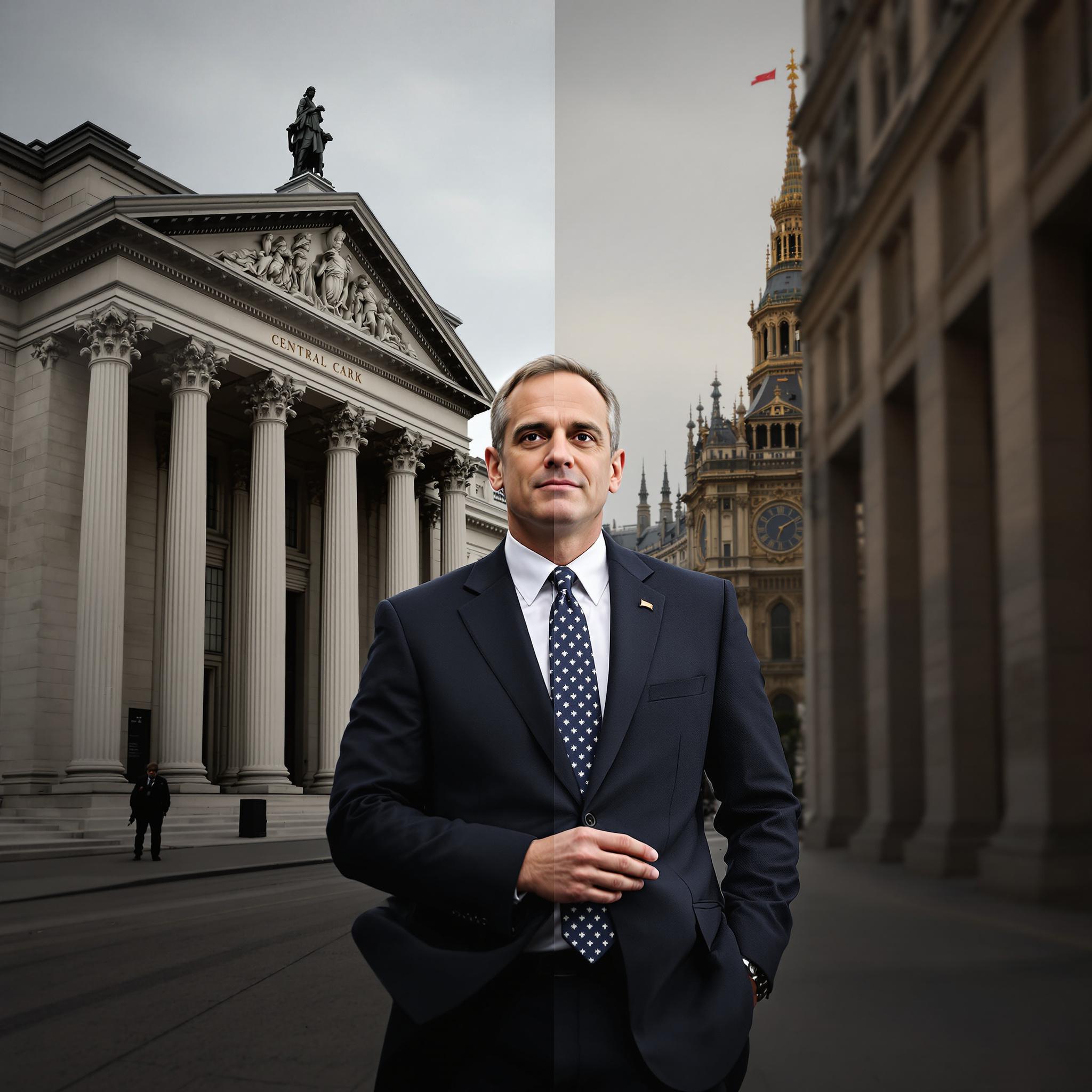
#Mark Carney From Central Banker to Political Leader
Mark Carney: The Rise of a Global Economic Leader
In the midst of the 2008 global financial crisis, while many nations struggled to keep their economies afloat, Canada emerged remarkably resilient. At the helm of this success story was Mark Carney, whose exceptional leadership as the Governor of the Bank of Canada helped navigate the country through one of history's most turbulent economic periods.
Leadership During Crisis
When panic gripped global markets, Carney's steady hand and innovative approach to monetary policy set Canada apart. His strategic decisions included:
- Implementing targeted interest rate adjustments
- Maintaining strict banking regulations
- Introducing forward guidance policies
- Ensuring financial system stability
Revolutionary Central Banking
As the youngest central bank governor among G7 nations, Mark Carney brought fresh perspectives to economic leadership. His success in Canada led to an unprecedented move – becoming the first foreigner to lead the Bank of England in its 319-year history.
Beyond Traditional Banking
Carney's influence extends far beyond conventional central banking:
- Pioneered climate-conscious financial policies
- Championed sustainable banking practices
- Advanced digital currency discussions
- Promoted financial inclusion initiatives
His unique approach to combining economic stability with forward-thinking policies has created a new blueprint for central banking in the 21st century. Today, Mark Carney continues to shape global economic discourse, proving that innovative leadership can transform crisis into opportunity.
Mark Carney's British Legacy: A Bridge Between Two Continents
When Mark Carney crossed the Atlantic to become the Governor of the Bank of England in 2013, he made history as the first non-Briton to hold this prestigious position in the bank's 319-year history. This unprecedented appointment marked a pivotal moment in global financial leadership.
Revolutionary Tenure at the Bank of England
During his seven-year tenure, Carney faced numerous challenges:
- Brexit Navigation: Steered monetary policy through the uncertain waters of Brexit, maintaining financial stability during unprecedented political turbulence
- Economic Innovation: Introduced forward guidance to British monetary policy, providing clearer signals to markets and businesses
- Climate Initiative: Pioneered the integration of climate risk assessment into financial planning, making the Bank of England a global leader in green finance
Strategic Impact and Policy Shifts
Carney's leadership brought significant changes to British financial policy:
- Implemented stress testing for major banks
- Maintained historically low interest rates to support economic growth
- Enhanced transparency in central bank communications
- Developed new regulatory frameworks for fintech and digital currencies
Global Influence
Under Carney's guidance, London reinforced its position as a global financial hub:
- Strengthened international banking relationships
- Enhanced cooperation between major central banks
- Established new protocols for cross-border financial stability
- Led discussions on financial technology innovation
His unique perspective as both an outsider and seasoned central banker allowed him to bridge North American and European financial philosophies, creating a more integrated global financial approach.
The Carney Effect
The impact of Mark Carney's leadership continues to resonate through:
- Modern monetary policy frameworks
- Enhanced focus on climate-related financial risks
- Improved central bank communication strategies
- Stronger international financial cooperation
His tenure represents a masterclass in navigating complex economic challenges while maintaining strategic vision and global perspective.
From Finance to Politics: Mark Carney's Bold Move to Lead the Liberal Party
In a remarkable transition that has caught the attention of both financial and political circles, Mark Carney has embarked on an extraordinary journey from central banking to political leadership. His recent election as the leader of Canada's Liberal Party marks a fascinating evolution in the career of one of the world's most respected economic minds.
A Natural Progression
Carney's path to political leadership seems almost inevitable in retrospect. His experience steering both the Bank of Canada and the Bank of England through turbulent economic times has equipped him with unique insights into policy-making at the highest levels. This background offers him a distinctive perspective on the intersection of economics and public service.
Why Politics Now?
The timing of Mark Carney's political emergence is particularly significant. In an era where economic challenges and climate change concerns dominate public discourse, his expertise in both areas positions him as a uniquely qualified leader. His transition reflects a growing recognition that economic expertise is crucial for effective political leadership.
What This Means for Canadian Politics
Carney brings to Canadian politics:
- Deep understanding of global financial systems
- Proven crisis management experience
- Strong international connections
- Expertise in climate finance and sustainable economics
His leadership of the Liberal Party could signal a shift toward more economically-informed policy making, potentially reshaping Canadian political discourse around financial and environmental issues.
Looking Ahead
As Mark Carney steps into his new role, the financial world watches with interest. His unique combination of economic expertise and political ambition might just represent the kind of leadership needed for today's complex challenges. The question now is how effectively he can translate his financial acumen into political success.
Global Economics and Climate Change: Mark Carney's Vision for the Future
As global challenges become increasingly interconnected, Mark Carney stands at the forefront of addressing two of the most pressing issues of our time: financial stability and climate change. His unique perspective, shaped by years of experience in central banking, offers invaluable insights into how these challenges can be tackled simultaneously.
Financial Innovation for Climate Action
Under Carney's leadership, several groundbreaking initiatives have emerged:
- The Task Force on Climate-related Financial Disclosures (TCFD)
- Green finance frameworks for sustainable investment
- Carbon pricing mechanisms for financial markets
Building Resilient Economic Systems
Mark Carney's approach to economic resilience focuses on three key pillars:
- Sustainable finance integration
- Climate risk assessment in financial planning
- International cooperation for environmental standards
Future-Focused Policy Making
His vision extends beyond traditional economic metrics:
- Promoting long-term value creation over short-term profits
- Integrating environmental considerations into monetary policy
- Developing new frameworks for measuring economic success
Breaking New Ground
Through his work at the Financial Stability Board and beyond, Mark Carney has demonstrated that economic prosperity and environmental protection are not mutually exclusive. His innovative approaches continue to influence global policy discussions and shape the future of sustainable finance.
The impact of Carney's vision is already visible in:
- Enhanced corporate climate disclosures
- Growing green bond markets
- Increased institutional focus on sustainable investment
His leadership continues to inspire a new generation of policymakers and financial experts who understand that addressing climate change is not just an environmental imperative but an economic necessity.
The Legacy of Mark Carney: Setting New Standards in Global Leadership
In the intersection of finance, politics, and global economics, few figures have left as profound an impact as Mark Carney. His journey from central banking to political leadership exemplifies a unique blend of expertise that continues to shape international policy and economic thought.
Revolutionary Central Banking Leadership
Mark Carney's tenure at both the Bank of Canada and the Bank of England marked watershed moments in central banking history. During the 2008 financial crisis, his steady hand guided Canada through turbulent waters, establishing a blueprint for crisis management that other nations would later emulate.
Climate Finance Pioneer
Perhaps most notably, Carney transformed the relationship between finance and climate action. His groundbreaking work on climate-related financial risks has:
- Established new frameworks for sustainable finance
- Influenced global banking policies
- Created momentum for green investment initiatives
Political Evolution
The transition of Mark Carney into Canadian politics represents more than a career change – it symbolizes the evolution of modern leadership. His unique perspective, combining economic expertise with political acumen, offers:
- Fresh approaches to policy-making
- Integration of financial and social priorities
- Global perspective in domestic governance
Lasting Impact
Carney's influence extends beyond institutional boundaries. His legacy includes:
- Modernization of central banking practices
- Integration of environmental concerns into financial planning
- Bridge-building between public and private sectors
- Innovation in economic policy frameworks
As we look to the future, Mark Carney's multifaceted career serves as a template for modern leadership – one that embraces complexity, champions sustainability, and demonstrates the value of cross-sector expertise in addressing global challenges.